
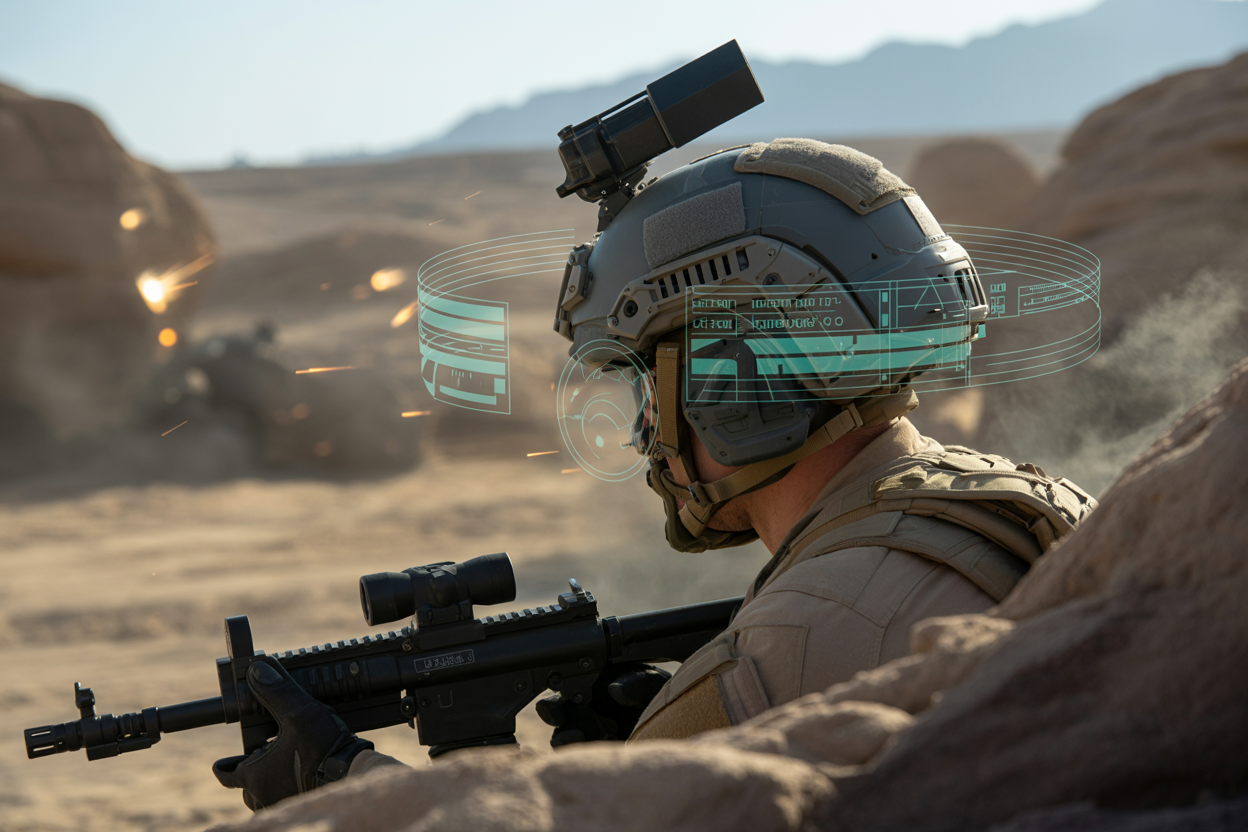
The United States Army has signed a 10-year contract with Anduril Industries – one of the most recognizable defense startups in Silicon Valley. The value of the contract may reach up to USD 20 billion. This is not an ordinary tender, but a signal that Washington is seriously changing the way it buys military technologies. Will US Army soldiers soon be wearing futuristic helmets straight from Call of Duty Modern Warfare?
One contract instead of chaos
The contract starts with a five-year base period, with an option to extend it for another five years. It includes Anduril hardware, software, infrastructure and services. Crucially, it replaces over 120 separate purchasing procedures that have so far distracted the army’s cooperation with the company. Purchasing consolidation sounds boring, but in practice it means a huge increase in operational efficiency and speed of implementation.
The chief technology officer of the Department of Defense CIO put it bluntly: The modern battlefield is increasingly defined by software, and the ability to quickly acquire and deploy it is becoming a strategic advantage.
Who is Palmer Luckey?
Luckey’s vision is autonomous fighters, drones, uncrewed submarines – in short, an army of the future managed by algorithms. The company, whose name (like Palantir) comes from a magical artifact from “The Lord of the Rings”, generated approximately USD 2 billion in revenue last year. And according to unofficial reports, it is talking about a new round of financing at a valuation of as much as USD 60 billion.
Anduril and the dirty game surrounding AI in the military
The Anduril contract comes at a time when the AI and defense landscapes are at odds. Anthropic sued the Department of Defense after it deemed the company a supply chain threat following failed contract negotiations. OpenAI signed its own deal with the Pentagon, which triggered a consumer backlash and the departure of at least one of its executives.
Luckey didn’t bite his tongue – on the X platform he stated that Anthropic’s attempts to draw “red lines” around autonomous weapons or mass surveillance are an unacceptable position for the United States.
The era of defense startups has just entered a whole new level.