
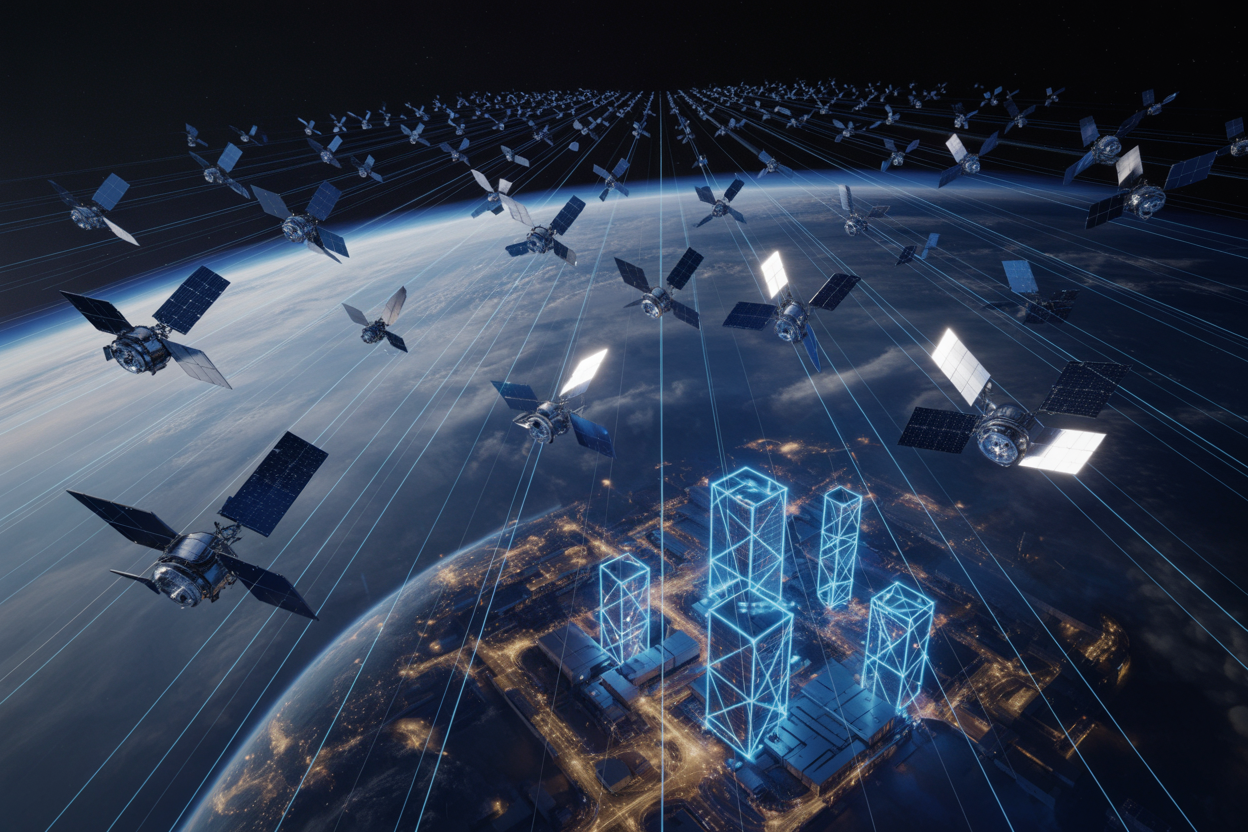
Imagine a thousand satellites orbiting above the Earth, which – instead of transmitting GPS or Internet signals – shoot infrared beams straight at solar farms. Sounds like a sci-fi scenario? Meanwhile, Meta has just signed a deal that could make this a reality.
The race to secure electricity for AI models has reached a new level: Meta has struck a deal with startup Overview Energy in which 1,000 satellites would direct infrared light to solar farms that power data centers – at night.
Meta wants to solve a problem that costs billions
Meta did not disclose financial terms of the deal, which will give the company preferential access to Overview Energy’s future capacity. Commercial energy supply is scheduled to start in 2030. However, the scale of the company’s energy appetite is impressive – in 2024, Meta data centers consumed over 18,000 gigawatt hours of electricity, which would be enough to power over 1.7 million American homes for a year.
Energy from geostationary orbit
The four-year-old startup from Ashburn, Virginia, emerged from the shadows last December with a solution that bypasses the technological challenges associated with transmitting energy using lasers or microwaves.
Instead, the company is developing spacecraft that collect solar energy in orbit, convert it to near-infrared light and direct it to ground-based solar farms that convert that radiation back into electricity.
The satellites will collect solar energy 24/7 in geostationary orbit – about 35,000 km above the Earth’s surface – and transmit it as low-energy infrared light. CEO Marc Berte ensures that the beam is safe for people, animals and aircraft.
Timetable and ambitions
Meta signed the first power reservation agreement with Overview for the supply of up to 1 gigawatt of energy. Overview has already demonstrated air-to-ground energy transfer and plans to launch a satellite into low orbit in January 2028 to perform the first space-based energy transfer. Ultimately, there will be 1,000 spacecraft in geostationary orbit – each of them will operate for over 10 years.
The system will be able to shift energy between continents in real time, responding to current demand, without requiring changes to ground infrastructure.