
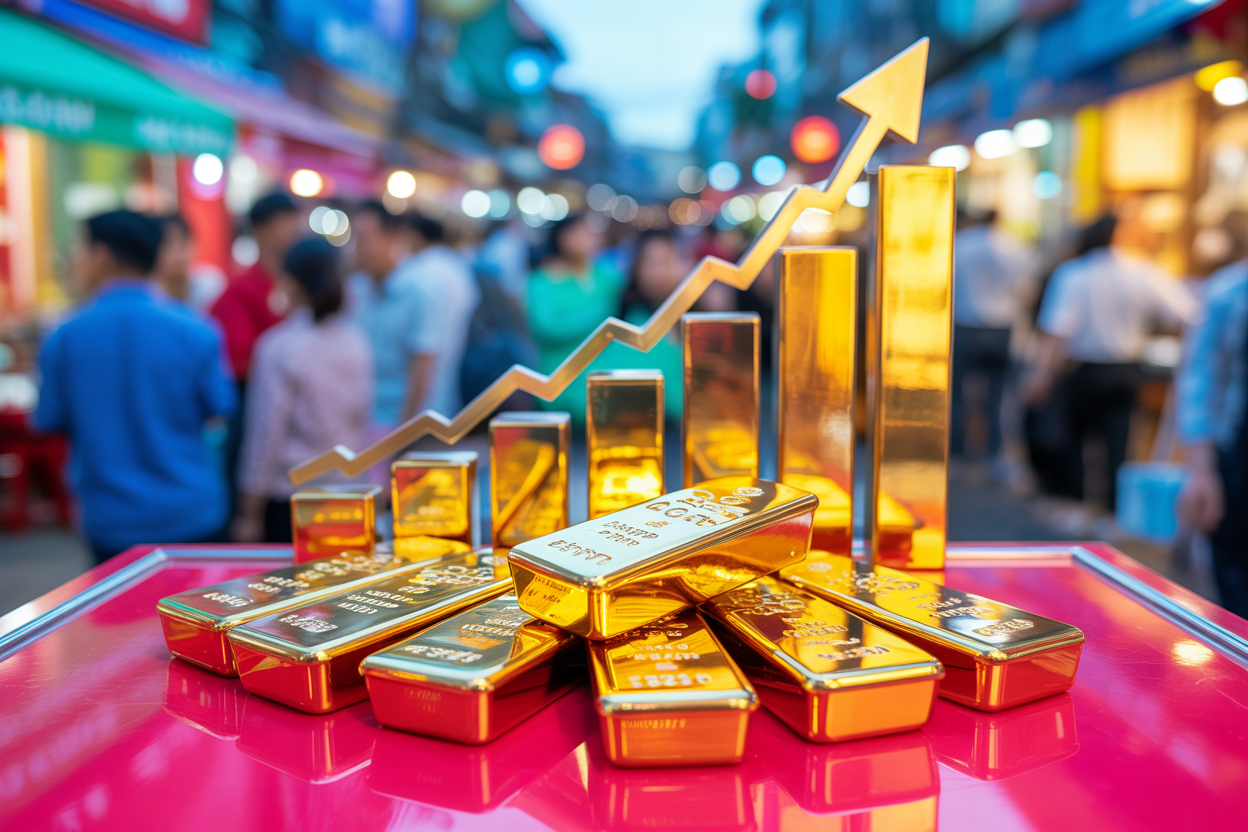
Gold above USD 4,300 per ounce? Sounds unreal? And yet this is our reality on October 17, 2025. In this article, we will dive into the world of the precious metal, which has grown by over 60 percent this year and become the first asset worth $30 trillion. But I won’t throw out dry facts here – I will add some color from Asia and Australia, where people literally line up in queues for kilometers to get at least an ounce of this shiny treasure. Because gold is not only about charts. These are emotions, fear of inflation and the eternal temptation to have something tangible in a chaotic world. Recently we celebrated breaking USD 4,200, but as you can see, that’s not the end.
Let’s start with the heart of the matter. According to CoinDesk analysis, gold is currently testing key resistance levels that we last saw at the 2011 and 1974 highs. We are talking here about a comparison to the M2 money supply, a broad indicator including cash, deposits and savings. Since the bottom in 2022, gold has gained about 150 percent. These are not transfers.
In the 1970s, during stagflation, that nightmarish mix of recession and runaway inflation, the precious metal jumped another 180 percent before reaching its peak. Now, with prices at historic highs, analysts are wondering: is this a sign of the end of the bull market, or maybe a spark for another jump? I’m betting on the latter. After all, in an era of geopolitical uncertainty, low interest rates and rising public debt, gold always comes out on top.
Market reaction?
And the market? Well, gold beats not only traditional currencies, but also cryptocurrencies. The gold/bitcoin ratio has increased by 50 percent this year – bitcoin, the supposed king of digital gold, is now worth only 24 ounces of the precious metal, i.e. 40 percent below its peak in December 2024. Bitcoin’s capitalization is barely 7 percent of the value of the entire gold market, and the cryptocurrency is worth around USD 2 trillion at a price above USD 100,000 per coin. It’s ironic: in a time when everyone is talking about memes, NFTs and metaverses, good old gold shows who really rules here as an “unproductive” asset. Compare it to Nvidia or Apple, these companies pump in profits from innovation, and gold? It just is. And therein lies his strength.
Craze in the streets and hour-long queues
But what about the charts – let’s get to life. In Australia and Vietnam, gold has become a national sport. In Sydney, at Martin Place, there are queues longer than for a new iPhone in front of the ABC Bullion store. Last week, according to reports from the Sydney Morning Herald and Switzer Daily, thousands of people – from retirees to young investors – waited for hours to buy gold bars. Prices have jumped 50 percent in a year, and experts like ABC Bullion’s Jordan Eliseo say:It’s crazy, the stores are bursting at the seams“.
Why? Because Australians feel that the shares of tech giants may burst, and political instability – from the US elections to European frictions – forces them to look for something tough. As a result, gold is expected to become the second largest export profit mine after iron ore, with forecasts for $113 billion this year.
Similarly in Vietnam, where the situation is even more hectic. The dong is losing value, and the official exchange rate is 25,166 per dollar, but on the black market it is even 26,430, which gives a 4.6 percent disproportion. Gold? It lands at VND143 million per tael (that’s roughly an ounce), a premium of 32 percent above global rates. According to AInvest and local media such as VietnamNet, in Hanoi, the streets of Tran Nhan Tong are filled with crowds. People compare it to the queues of the subsidy era, when they fought for bread.
The government tries to stabilize the currency by selling dollars and tightening capital controls, but in vain. Since January, gold prices in Vietnam have jumped by 60 percent, and the new regulations of October 10, ending the central bank’s monopoly on gold imports, are only heating up the atmosphere. It is not just an investment, because in Asia gold is a tradition, protection against inflation and a way to hedge currency chaos.
What’s next?
What does this mean for us mere mortals? If CoinDesk is right and gold breaks through this resistance, we could see a 1970s scenario – another 180 percent increase over M2. Forecasts from LiteFinance show an average price of $4,022 at the end of October, and even $4,339 by December. Gold ETFs are recording the highest inflows since 2020, and central banks, especially from emerging markets, are buying heavily. But beware: high prices are strangling demand for jewelry, and in Australia Professor Allan Trench warns this will drive up the cost of gold products, from electronics to renewable energy.
To sum up, gold is no longer a relic of the past, it is the king of the present. In the queues in Sydney and Hanoi we see fear of tomorrow, but also faith in something lasting. If you’re like me and feel like the world is spinning too fast, maybe it’s time to take a look at your wallet. Because who knows, maybe the next gold bull market will change not only the markets, but also our everyday lives. What do you think? Are you buying gold at these levels?