
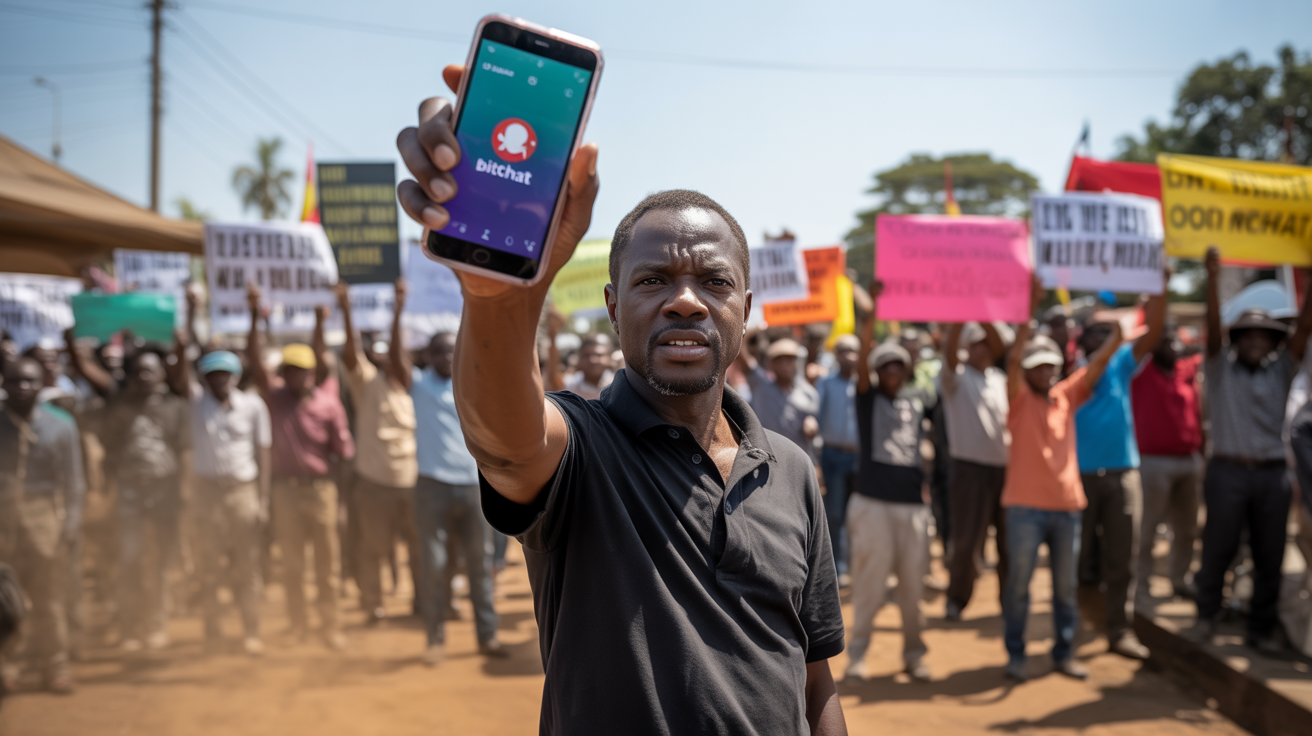
On Wednesday, a day after opposition leader Bobi Wine asked his constituents to download the Bitchat app, searches for information about the app on Google jumped from 0 to 100.
Struggle for power
Wine’s concerns are not unfounded: During the 2016 election, Ugandan President Yoweri Museveni blocked voters’ access to social media, citing security concerns. In 2021, he did it again.
On Tuesday, Wine wrote on X that the presidential elections in Uganda, which will be held on January 15, may not be fully democratic either:
They turn off the Internet to block communication and prevent citizens from organizing and verifying election results.
The Pan-African Human Rights Defenders Network says social media blocks mainly harm the political opposition, which uses such platforms to organize their promotional activities. The government controls the mainstream media, so it doesn’t need the network.
Last week, Reuters reported that the Ugandan government is also restricting the use of Elon Musk’s Starlink, which could provide high-speed internet to areas where there were previously no reliable options.
Opposition leader in Uganda promotes Bitchat
Chrome statistics show that Bitchat has been downloaded 936,104 times since its launch, with over 4,252 downloads in the last 24 hours and over 32,524 in the last week.
This is part of a broader trend: in September, there was also a sharp increase in the number of Bitchat downloads in Madagascar – also in connection with social protests. The same thing happened during unrest in Nepal and Indonesia earlier this month.
