
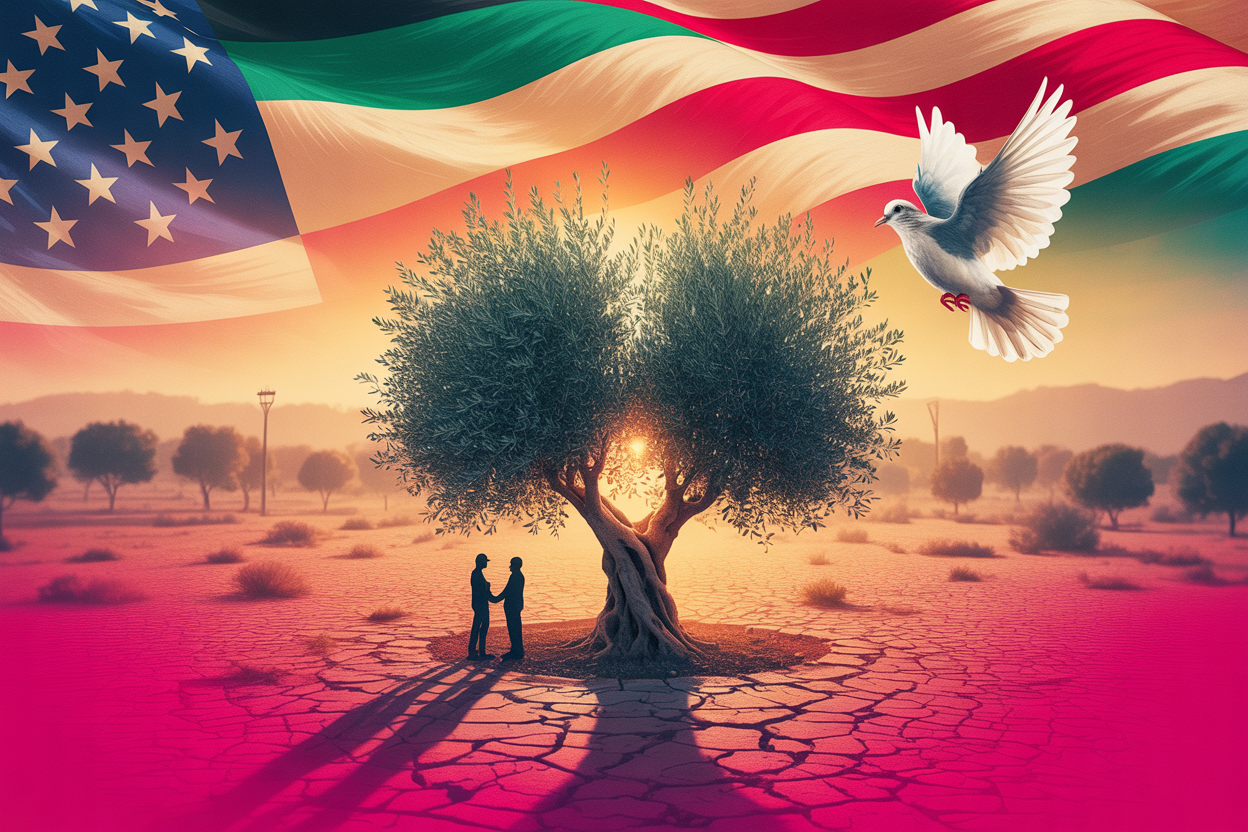
On Monday, September 29, 2025, Donald Trump, surprised the world with its latest announcement. A peace plan for the Middle East, which aims to end the conflict in the Gaza Strip for two years. During a press conference in the White House, Trump presented the details of his “peace plan”, which, he claims, can bring stability and prosperity to the region, in chaos for decades. The latest events of October 3, 2025, including Hamas’ response to this initiative, however, add both hope and uncertainty about the realization of these ambitious announcements.
What does Trump propose?
The main element of the plan is the creation of a temporary, “technocratic and apolitical” Palestinian committee, which would manage the Gaza Zone on a daily basis. This committee would be supervised by a new international structure, called the “Board of Peace), with Donald Trump at the head and former British Prime Minister Tony Blair in the composition. As Trump said: “It could be a day that will change the history of the Middle East.”
The plan also assumes demilitarization of Gaza, under the supervision of independent observers, and a gradual withdrawal of Israeli forces from the area, while maintaining temporary presence on the border to ensure security. In recent days, on October 3, Trump appealed for the immediate suspension of Gaza’s bombing by Israel to allow safe release of hostages, expressing optimism after Hamas’ statement about readiness to be negotiated.
Reactions and context
Trump’s announcement met with mixed reactions. On the one hand, leaders from the Middle East and Europe expressed hope for a possible breakthrough, pointing to the fatigue of the decades of the conflict. On the other hand, skeptics remind you that this is not the first time Trump announces a “room plan”. In 2020 he presented a vision of resolving the Israeli-Palestinian conflict, and in 2025 he used similar terms in the context of the Russian-Ukrainian war.
Will it be different this time? Israeli Prime Minister Benjamin Netanyahu, who recently sharply criticized the recognition of the Palestinian state by several Western countries during a speech on the UN forum, expressed skepticism towards some elements of the plan, especially against the perspective of the Palestinian state. Something he consistently opposed.
Meanwhile, on October 3, Hamas published a detailed statement in which he agreed to release all hostages, living or dead, in accordance with Trump’s 20-point plan, expressing readiness for immediate negotiations with mediators, such as Qatar and Egypt. However, Senior Hamas, Mous Abu Marzouk, said the same day that the release of hostages within 72 hours is “theoretical and unrealistic”, which casts a shadow and fears to the schedule of the plan. Qatar and Türkiye exerted pressure on Hamas to accept the proposal, although disarming the group still remains a key point.
What effect?
Despite Trump’s optimistic words, the reality on the spot unfortunately remains dramatic. On the night of October 3-4, Israeli raids in gas continued, killing at least 15 people, despite Trump’s appeal to stop bombing. The Netanyahu office is preparing to analyze Hamas’ response, but the lack of consent to full disarmament and continuation of the attacks indicate the fragility of the weapon suspension. According to the Ministry of Health, controlled by Hamas, from October 2023 over 66,000 people in Gaza were killed in conflict, which further emphasizes the urgent need for peace.
Trump emphasizes that his plan is the result of months of negotiations, including the efforts of a special USA, Steve Witkoff, who worked on the neutralization of Iranian nuclear abilities and restoring the room in gas. According to Trump, “we are very close to achieving the room that the region has not seen for decades.” However, the historical failures of previous peace initiatives, combined with the current activities of Israel, constantly raise many doubts about these optimistic announcements.
Is this a real breakthrough?
Is this a real breakthrough or another campaign promise? Only time will show. One thing is certain, Trump, known for their brave declarations, once again puts himself as a “room architect”. Although the world is reserving whether his words will translate into real actions. The continuation of Israeli attacks and the unclear attitude of Hamas suggest that the road to the room is still bumpy.
Does the Middle East really stand at the threshold of a new era of stability, or will it still remain a conflict arena, as in the last decades? The answer to this question may be defined not only by the region, but also the heritage of Trump on the world political scene. At the moment, on October 4, 2025, hope is mixed with uncertainty, and the future of the region is still hanging in the Italian. Let’s hope that this cruel time will go down in history, and the world will start a new chapter titled “Peace”.