
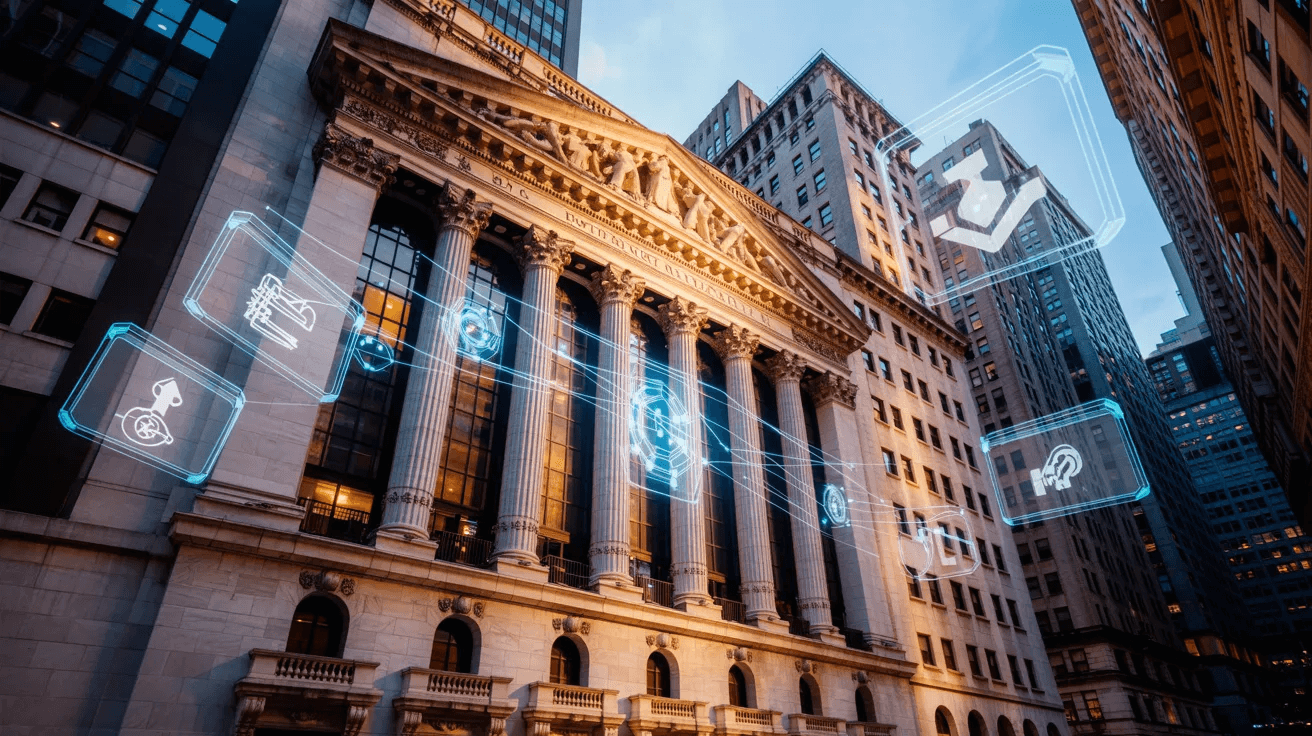
The New York Stock Exchange (NYSE) has officially announced plans to launch an innovative platform dedicated to trading in tokenized stocks and ETFs. This strategic decision by one of the pillars of the global financial system confirms that blockchain technology is becoming the foundation of the modern capital market.
Wall Street integrates with distributed ledger technology
The NYSE’s decision to enter the asset tokenization sector, i.e. transferring rights to traditional securities on the blockchain, is a milestone in the process of adopting digital solutions by the largest financial institutions. NYSE Group, part of the powerful Intercontinental Exchange (ICE) consortium, strives to create an ecosystem that combines rigorous regulatory standards with the flexibility offered by modern technology. During recent public speeches, stock exchange representatives emphasized that this technology is no longer just an experiment, but a real optimization tool.
Analysts suggest that the main motive for this action is the desire to improve settlement processes. Currently, traditional securities trading is based on complex mechanisms that require time to finalize the transaction. The use of blockchain allows for an almost immediate transfer of ownership, which drastically reduces contractor risk and operational costs, which amount to billions of dollars annually.
Tokenization as a response to the growing needs of investors
The introduction of tokenized versions of shares and ETFs opens the way to trading that could take place outside standard stock exchange opening hours. Although the crypto market has accustomed investors to availability 24 hours a day, seven days a week, traditional markets still remain hostage to time zones and holidays. Data indicate that the growing interest in RWA assets, i.e. real-world assets embedded in digital networks, forces the largest players to change their approach to existing infrastructure.
It is worth noting that this is not the first attempt to bring both worlds closer together, but the authority and huge scale of NYSE operations give this endeavor a completely new importance. Market experts predict that the success of this platform may encourage other global stock exchanges to take similar steps, which in the long run will lead to the full digitization of global capital markets. Liquidity that was previously dispersed can now be consolidated within transparent and secure digital registers.

Security and the future of regulation
Despite great enthusiasm from the Web3 community, implementing the platform will require close cooperation with regulatory authorities such as the US Securities and Exchange Commission (SEC). Building trust in this area is crucial, especially since cryptocurrency markets have often been highly volatile in the past, which has raised understandable concerns among conservative institutional investors.
However, NYSE plans to use its many years of experience in risk management to offer a safe and fully transparent product. The new platform is intended to become a solid bridge connecting the stability of Wall Street with the innovation of the crypto sector. Although the exact release date and the full list of supported assets have not been announced yet, the very fact that advanced work has been undertaken on such a solution indicates that the digital transformation of finance is no longer just a vision of the future, but has become an inevitable fact.