

- According to Trezor, the attacker probably exported data from the systems of the shipping company Skladon about 27,000 orders placed from August 9 to November 7, 2026.
- Names and surnames, addresses, telephone numbers, e-mails and names of purchased products and their prices were leaked. There were no recovery phrases, PINs or additional passwords in this data, and Trezor’s systems were not compromised.
- Some customers have already reported calls from scammers. This is the third incident with Trezor’s external partners in just over three months.
A fraudster who calls a Trezor customer today may know the model of the wallet purchased and the price from the order. This is how the manufacturer describes the effects of the leak from the Skladon shipping company. Data from approximately 27,000 orders fell into foreign hands, and some customers, according to Trezor, have already reported calls from fraudsters.
What leaked from the shipping company
The leak included names and surnames, delivery addresses, telephone numbers, e-mails as well as order dates, product names and prices. The scammer can use this information to convince the customer that they are really calling on behalf of the manufacturer. There were no backup wallets, PINs or additional passwords in this data. Trezor notes that neither he nor Skladon stores them, and his own systems remain intact.
Orders placed after November 7 were not affected by the leak. Trezor sent e-mails to those affected who could be reached and reported the matter to the data protection authority. However, he did not write to some people who bought from August 9 to 14. He has already anonymized their data in his own systems in accordance with the 90-day retention policy, although they could have remained in the partner’s database. There is a warning for them on the manufacturer’s blog and on the X website.

Third partner incident in just over three months
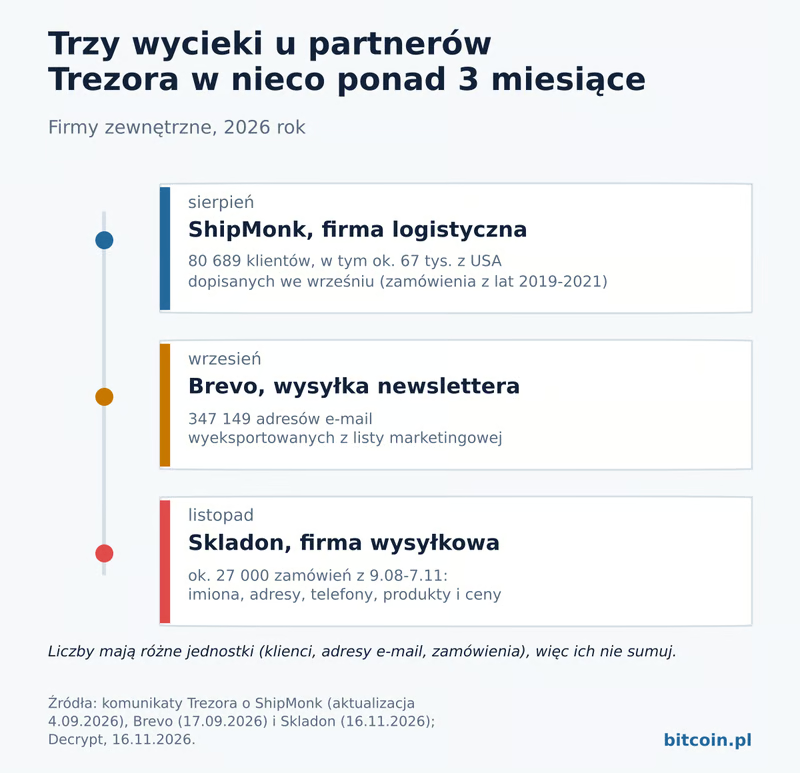
Trezor explains on website X that companies of its scale and scope do not operate efficiently without external suppliers. He adds on the blog that he is reviewing security requirements for partners and working to shorten the storage period for order data from 90 to 45 days.

Does the leak apply to buyers from Poland?
It is not known how many Polish customers may have been affected. Trezor only writes that Skladon sends orders to many countries, and the leak does not concern one region. According to Decrypt, Skladon does not support the USA, so buyers there were not affected by this incident.
If your order is from August 9 to November 7, please check if you received a warning from the manufacturer. The lack of an e-mail does not rule out a leak, because some people who bought from August 9 to 14 could not receive the e-mail. Doubts can be clarified with technical support from the official website.
How to recognize a fake Trezor phone call?
Trezor recommends treating any unexpected call, text message or email regarding an order as suspicious, even if the sender knows the wallet model and the amount paid. Merely having this information does not confirm his identity.
Contact technical support via trezor.io/support, the address of which you will enter yourself. Do not use the link, QR code or number provided in the suspicious message. Don’t give the caller a recovery phrase and don’t type it into the form or application they point to.
What does this mean to you
During your next purchase, anonymous collection allows you to limit the data transferred to the store and the shipping company. However, it will not remove information that was leaked during a previous order.