
- Tether’s CEO attributes the 94% decrease in transactions to the freezes, but he did not provide data or a method to check this result.
- The report examined 846 addresses linked to Iran and organizations it supports. In 84% of them, USDT accounted for over 80% of the transaction value.
- According to the authors of the report, 34 of the 39 addresses indicated by Israel in June 2023 were blocked only in March 2024.
Tether argues that it is ahead of sanctions
However, he did not specify the period and set of transactions covered by the 94% decline or the value from which it was calculated. Without this information, it is unknown how big the change was and whether it only affected USDT. The average block time he provides also does not explain how Tether reacted in each of the cases described by investigators.
Money flowed from 34 addresses before the blockade
The study covered 846 addresses that the US or Israeli authorities have linked to Iran and the organizations it supports, placing them under sanctions or designating them for seizure. USDT dominated in 84% of them. The authors adopted a threshold of over 80% of the transaction value expressed in dollars. The result describes this sample of addresses, not the share of USDT in all Iran transactions.
One example concerns 39 addresses identified by the NBCTF in June 2023 as being associated with Tawfiq Al-Law, a Hezbollah financier. Five were blocked earlier, and the remaining 34 were blocked only in March 2024, just before OFAC sanctions against Al-Law. Between the publication of the Israeli notice and the block, more than $34.6 million in USDT flowed from the addresses. The report indicates, among others: flows through Binance, Paribu and BTCTurk.
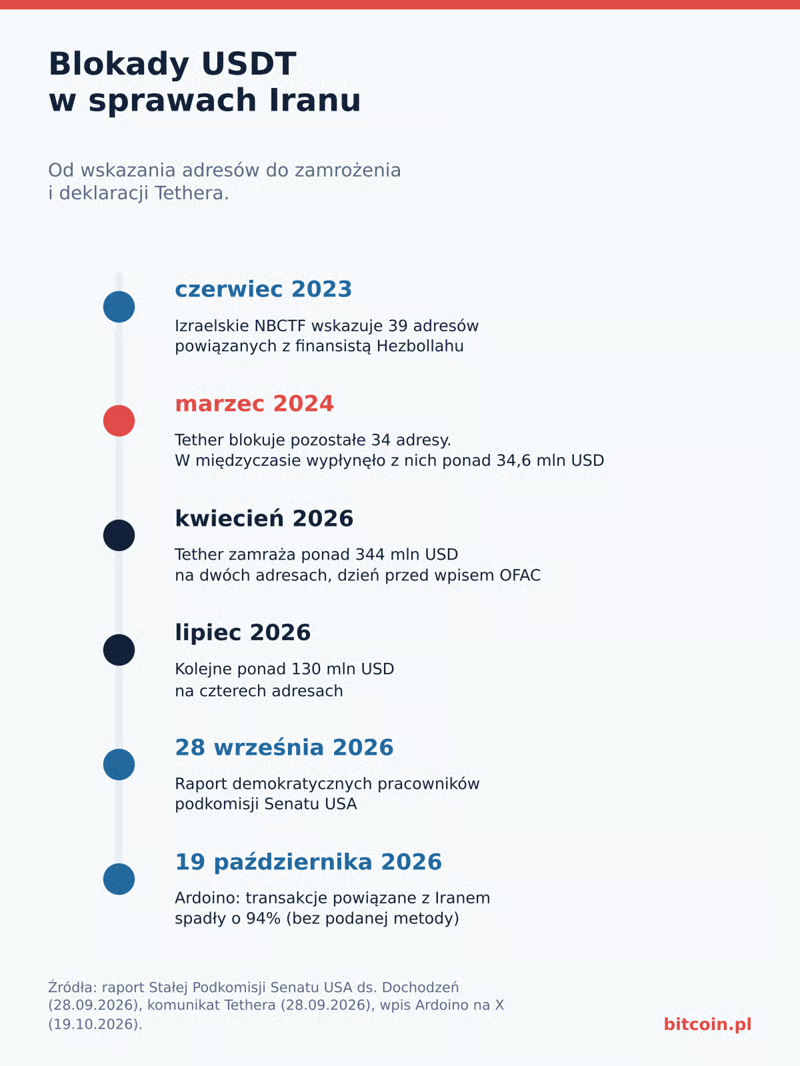
The authors note more frequent Tether reactions from autumn 2023, but they assess them as inconsistent. They also describe three addresses associated with Modex that received $575 million in USDT between April and June 2025. According to the report, they were not blocked until its publication. By then, the company had not responded to the subcommittee’s June letter.

The company points to 2026 freezes
The amounts reported are approximately $474 million. The announcement does not contain a full breakdown that would allow for the reconstruction of the declared approximately USD 550 million.
This year’s freezes do not resolve allegations about the 2023-2024 response. In the Al-Lawa case, it is also important which authority indicated the addresses first: the blockade could have preceded OFAC sanctions and at the same time occurred many months after the NBCTF was notified.

What the block means for a USDT holder
Tether may prevent USDT from being sent from a blocked address. Your own wallet doesn’t change that: you can still control the key, but you won’t send the tokens inside it. USDT blocking does not mean automatic freezing of other cryptocurrencies at the same address.