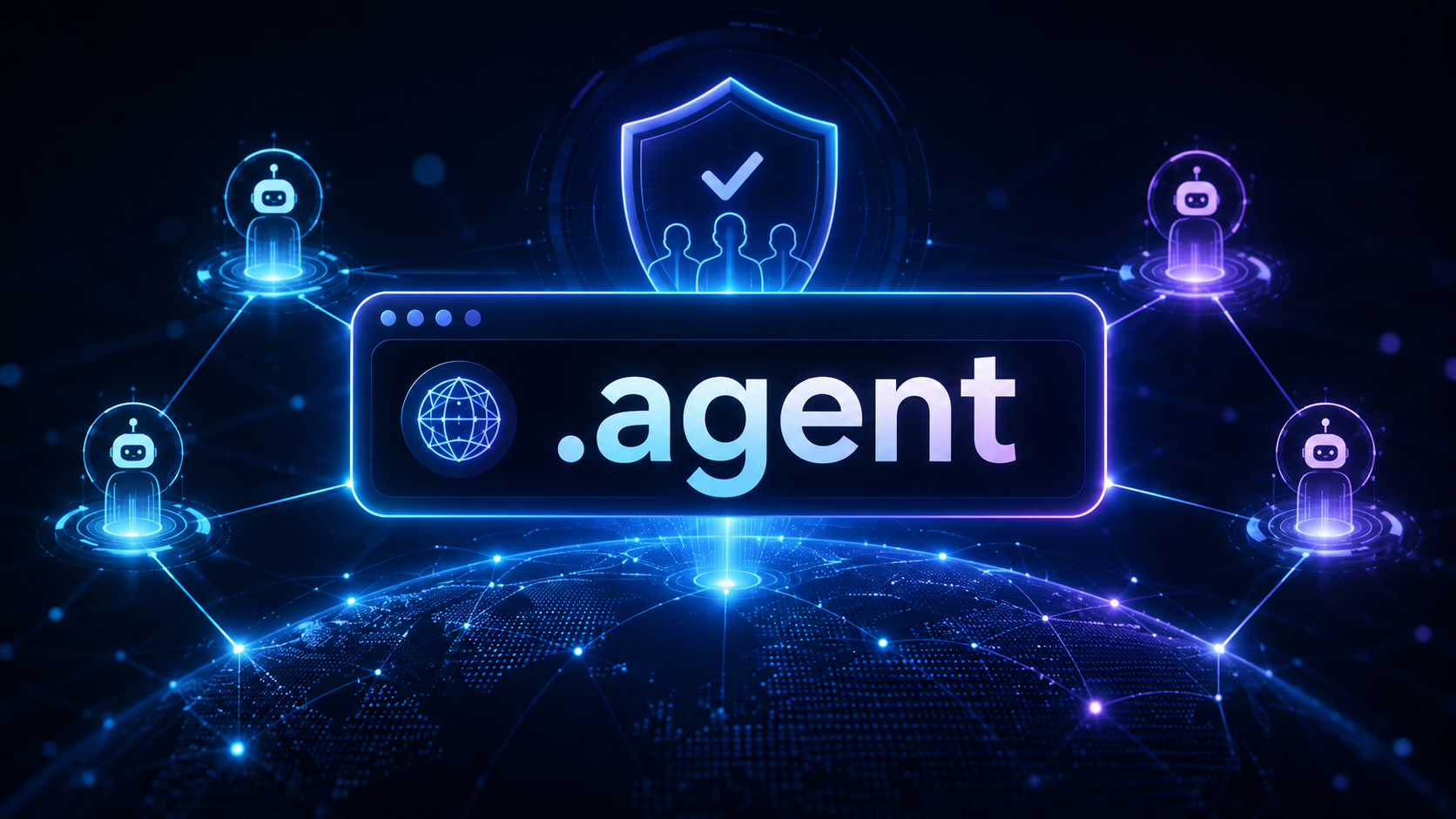
- Community Agent wants to submit a community application to ICANN for a new top-level domain
.agentintended for AI agents. - The project relies on open standards, community management and a public layer of agent identification, instead of control by a single technology company.
.agentan open naming infrastructure for AI agents. The project declares that it wants to submit a community application to ICANN as part of the round of new gTLDs in 2026.
.edu is associated with education, a .gov with public administration, yes .agent it would signal to the user that they are dealing with an AI agent or a service created for the world of agents. The project describes itself as an open community for agent creators, researchers, companies and developers who want to co-create standards, management principles and infrastructure for the so-called agentic web.
This is not yet a working domain that can be purchased from a registrar. .agent requires approval by ICANN, the organization responsible for the global domain name system. The current application round for new top-level domains started on April 30, 2026 and will last until August 12, 2026. Community Agent wants to run as a community application, i.e. one that is intended to represent the interests of a specific community, and not just one commercial entity.
Why might .agent matter?
At first glance, a domain is just an address. In practice, names on the Internet create trust, reputation and memory. Easier to remember support.firma.agent than a random technical ID hidden in the API. Even more importantly, an AI agent that acts on behalf of a company, user or organization will need to be verifiable. The user should know whether he is talking to a real agent of a given brand or to an impersonating tool.
Agent Community describes this problem as the lack of a common layer of naming, discovery, and trust for AI agents. Without such a layer, each platform can create its own policies, its own directories, and its own identifiers. This risks market fragmentation and, in an extreme scenario, a situation in which one large company controls access to the most important layer of agent identity.
This topic should sound familiar to Bitcoin.pl readers. In the world of Bitcoin and Web3, the same dispute has been recurring for years: whether the digital infrastructure should be open, interoperable and resistant to takeover, or closed in the ecosystem of one corporation. .agent is not a cryptocurrency project in the classic sense. This is not about a token, speculation or promise of profit. This is about the name and trust layer for the Internet, where an increasing part of the activity will be performed by autonomous programs.
AID, i.e. DNS for AI agents
The most interesting element of the project is not the name itself .agentbut the AID standard, i.e. Agent Identity & Discovery. In simple terms, AID works like “DNS for agents”. It allows you to publish a special record in DNS _agentthanks to which other tools can find the agent’s endpoint, check the supported protocol and verify its identity. The project states that AID supports various protocols, including MCP, A2A, OpenAPI, gRPC, GraphQL, WebSocket, and UCP.
It sounds technical, but the meaning is simple. If a company has its own AI agent, other systems should be able to find it without manually digging through documentation. In practice, a client or other agent can query DNS for a record _agent.example.comthen find out where the service is and how to connect to it. AID also provides verification mechanisms, including publishing the public key and endpoint confirmation using the Ed25519 cryptographic signature.
Importantly, AID is not just an idea written on a landing page. On March 16, 2026, the “Agent Identity and Discovery” paper was published as Internet-Draft in the IETF Datatracker. The IETF clearly marks such documents as working works, without formal standard status, but the very fact that it has entered into this process shows that the project is trying to speak the language of Internet standards, not just marketing.
Community instead of one gate
It is both an opportunity and a risk. An opportunity, because people who join early can really influence the direction of the project. Risk, because the final rules are not yet known, and approval .agent by ICANN is not guaranteed. The ICANN process itself is expensive and demanding. According to the official guide, the evaluation fee for gTLD applications is PLN 227,000. USD, except for selected cases covered by the support program.
However, the project already has visible dynamics. The Agent Community website lists over 24,000. members, and in March 2026, the team reported an increase from approximately 3,000. to over 21 thousand members after public support from Brave. The names visible on the project website also include people and environments associated with brands such as Ollama, Datadog, Netlify, Sourcegraph, Alibaba Cloud, Brave, NEAR, Product Hunt and Resend. We need to be precise here: the project communicates the support of “builders & researchers at”, i.e. people and communities around these companies, and not always a formal corporate partnership.
Why is it worth getting interested in this now?
If AI agents become one of the main layers of the Internet, their names will have a similar meaning to domains in the first decades of the Internet. The name can determine trust, visibility, security and recognition. For tech companies, Web3 projects, AI application developers, open source communities and startups, this is an area not worth sleeping on.
Supporting the Agent Community today does not involve purchasing a token or investing money. Membership is free, with pre-registration of your chosen name .agent is non-binding. The project itself informs that possible access to names will depend on ICANN approval and future allocation rules.
For the Polish Web3 and AI industry, this may be a good time to join the discussion earlier, and not only when the rules have already been established without our participation. The Internet of Agents will not be created in isolation from topics that we know well from cryptocurrencies: identity, interoperability, reputation, resistance to censorship, control over one’s own infrastructure and the risk of centralization.
Community Agent does not promise ready-made success. However, it shows a direction that may become important for the entire AI market. If .agent is approved, a public naming layer for agents may be created. If not, the AID standard itself and the discussion around open agent identity could still impact what the internet will look like in the coming years.
.agentbearing in mind that this is not yet a domain purchase, but a non-binding notification dependent on ICANN’s decision.