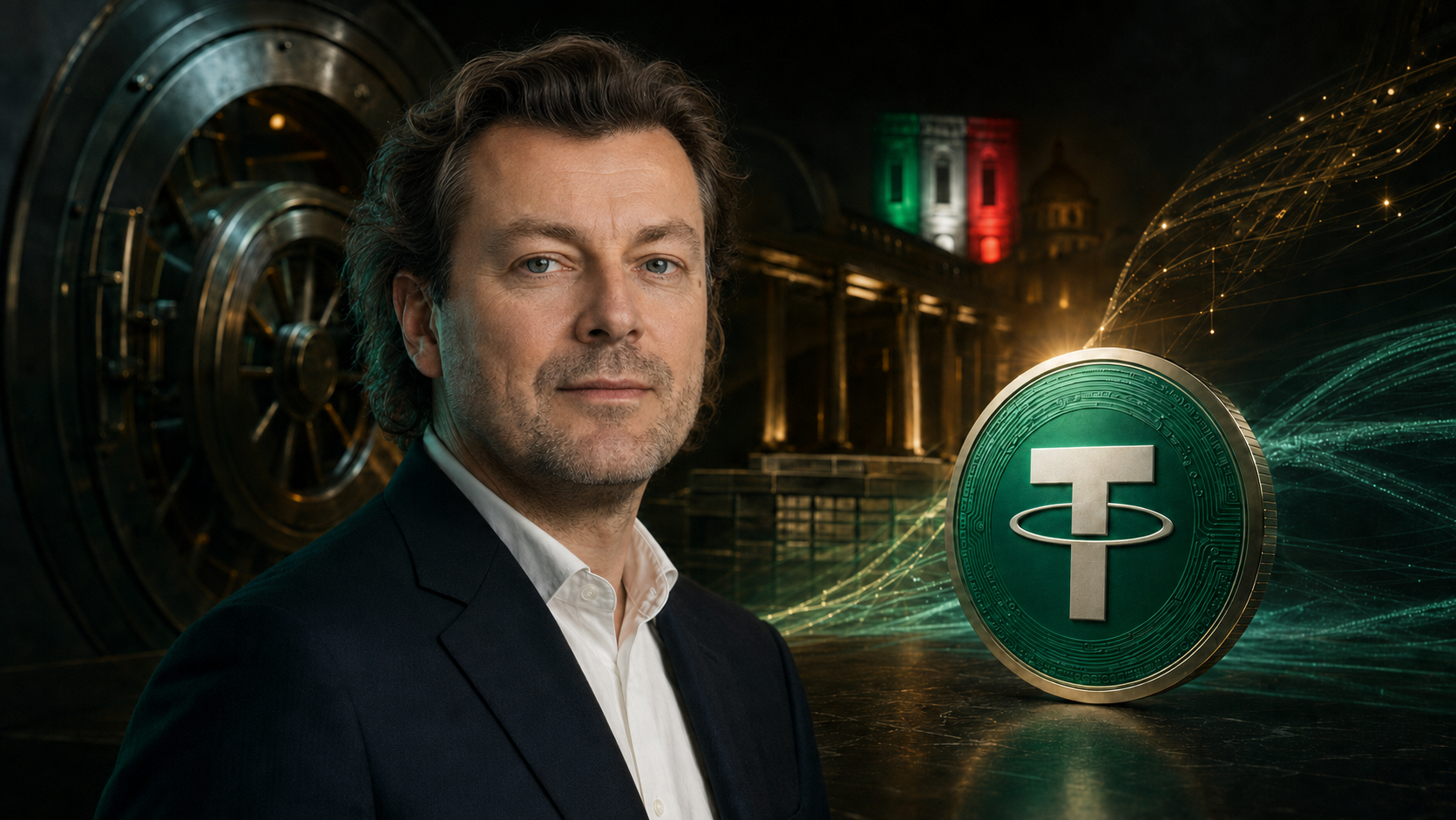
For years, the symbols of Italian wealth were Ferrero confections, Armani and Prada fashion houses, and the automotive empires of Ferrari and Agnelli. However, the latest Forbes ranking has upended this hierarchy. The richest Italian became Giancarlo Devasini – a former plastic surgeon who is behind Tether and the world’s largest stablecoin.
Hardly anyone would recognize him on the street. He rarely gives interviews, does not build recognition in social media and remains in the shadow of Paolo Ardoino, the much more media-friendly president of Tether.
Despite this, Giancarlo Devasini was recognized by Forbes as the richest Italian. His fortune was estimated at USD 89.3 billion.
This is almost twice as much as the fortune of Giovanni Ferrero, the owner of the empire producing, among others, Nutella, Kinder and Ferrero Rocher.
Devasini overtook Ferrero. He is the 22nd richest person in the world
Paolo Ardoino is fourth. The fortune of Tether’s president was estimated at USD 38 billion. This means that two of Italy’s four biggest fortunes were created by stablecoin companies.
It should be remembered that the USD 89.3 billion is not in Devasini’s private account. This is the estimated value of his shares in the private company. Forbes assumed Tether’s valuation at approximately USD 200 billion and the assumption that Devasini controls approximately 45% of the company.
Therefore, a change in Tether’s valuation is enough for its “paper” wealth to increase or decrease by billions of dollars.
From plastic surgery to electronics trading
Devasini’s story reads like a ready-made movie script.
Instead of pursuing a career as a doctor, he entered the electronics industry. He traded computer components, equipment and data carriers. Later, he even tried his hand at food deliveries.
In 2012, he became interested in cryptocurrencies. Initially, he offered CDs and DVDs on online forums in exchange for small amounts of bitcoins. Then he became involved in the development of the Bitfinex and Tether exchanges.
Today, many observers consider him one of the most important people behind the company’s financial strategy.
How did Tether build a billion-making machine?
USDT is a stablecoin whose value is equivalent to one dollar. When an eligible customer transfers dollars to Tether, the company can issue a corresponding number of tokens. The funds received go to the reserves.
The most important thing, however, is what happens next.
Tether does not hold the entire accumulated amount as interest-free cash. A large part of the reserves is invested in short-term US treasury securities and liquidity instruments. The reserves also include, among others: gold and bitcoin.
USDT itself does not pay interest to the holder. The profits generated by the assets that cover it go to Tether. With over $180 billion of tokens in circulation, even a few percent annual interest means billions of dollars in revenue.
This is one of the most profitable business models in the entire cryptocurrency industry.
Over USD 10 billion in profit within a year
At the end of March 2026, Tether had USD 191.8 billion in assets and USD 183.5 billion in liabilities. The surplus of assets over liabilities was approximately USD 8.23 billion.
The scale is huge. Tether has become one of the world’s largest holders of US debt, although it is not formally a central or commercial bank.
USDT is losing ground in Europe. Why is this important to you?
Globally, USDT remains the largest stablecoin and one of the most important sources of liquidity in the cryptocurrency market. It is used for trade, international settlements and for storing value in countries where access to the dollar is difficult.
However, in the European Union the situation is different. Tether has not obtained MiCA-compliant stablecoin issuer authorization. This does not mean an automatic ban on holding USDT in your own wallet, but regulated exchanges are limiting or withdrawing its support for European customers.
The other side of Tether: reserves, regulators and lack of full audit
The company’s history is not without controversy.
In 2021, Tether and Bitfinex reached a settlement with the New York Attorney General. The companies, without admitting or denying the office’s findings, agreed to pay $18.5 million and cease operations with the New York clients.
In the same year, the US CFTC fined Tether USD 41 million for previous misleading reserve declarations. The regulator’s findings concerned the years 2016–2019, not the current structure of the company’s assets.
Today, Tether publishes quarterly attestations prepared by BDO. This is a significant step towards greater transparency, but an assurance showing the status of assets on a specific date is not the same as a full audit of the financial statements covering the control systems, flows and liabilities of the entire group.
Do USDT holders have reason to worry?
Current reports indicate that Tether’s assets exceed the liabilities associated with the issued tokens. At the same time, USDT remains the product of a private company. Its holder bears the risk of the issuer, regulatory changes, reserve structure and potential liquidity problems during a sudden capital outflow.
European users must take into account MiCA and changes in exchange offers. People who plan to switch from USDT to USDC anyway can still check out the mentioned OKX campaign, which ends on July 31.
One thing is certain: a man whom most Europeans would not recognize in a photo created a fortune greater than that of the most famous Italian dynasties. Not thanks to fashion, cars or sweets, but thanks to the digital dollar used every day by the cryptocurrency market.