
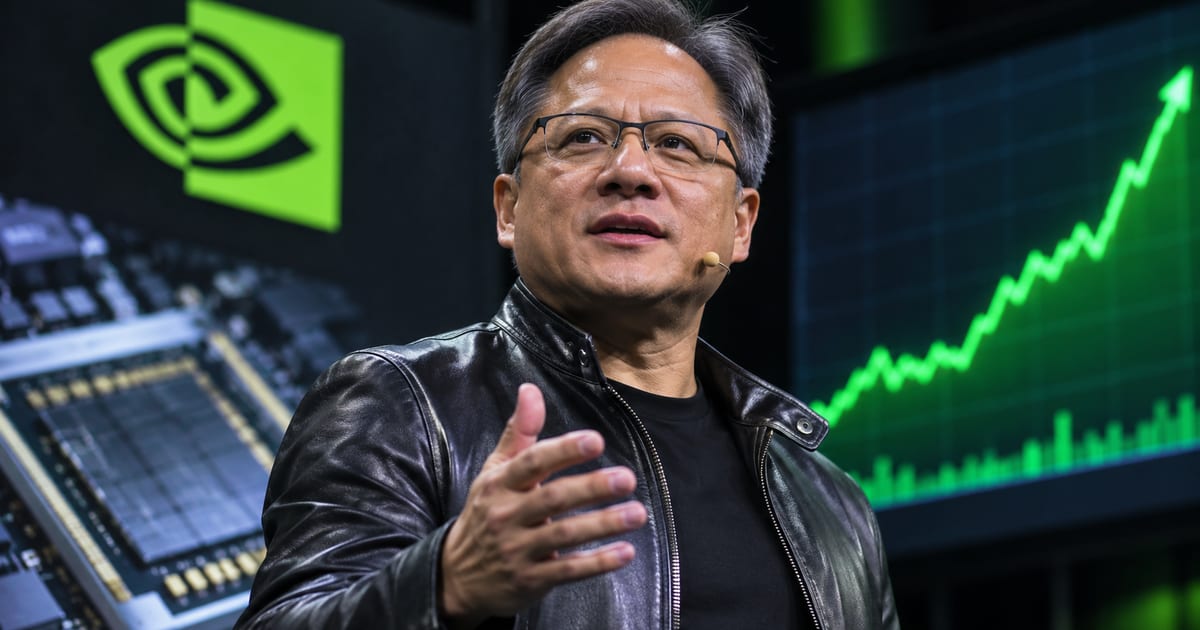
Jensen Huang takes over the helm of Nvidia again, just a dozen or so days after his loud resignation. The American technology giant’s board of directors unanimously decided to reinstate him as CEO. Investors reacted euphorically, and the company’s shares rose by over 33%, increasing its stock market valuation by approximately one trillion dollars.
This is an unexpected turn in a story that has been shaking Silicon Valley for two weeks. As recently as November 17, the chairman of the board of directors, Harvey Jones, strongly ruled out the possibility of rehiring Huang. Now the board has determined that his return is in the best interests of the company’s shareholders, employees and customers.
Nvidia shares up 33%. The trillion dollars goes back into the company’s valuation
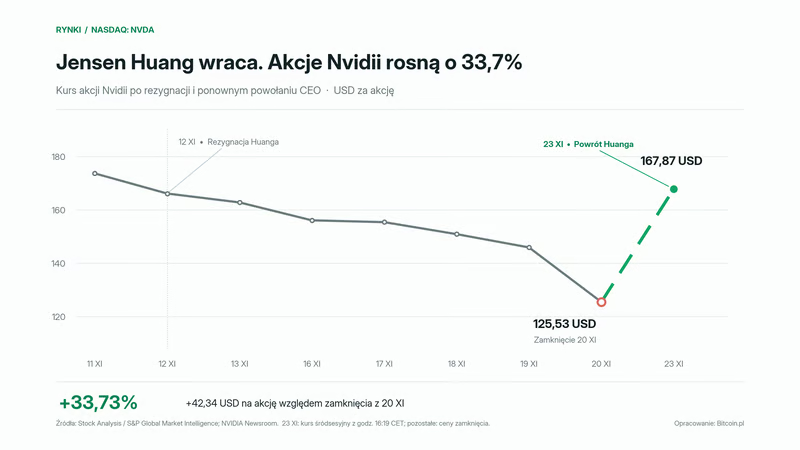
Wall Street’s reaction was immediate. On Monday, November 23, Nvidia (NASDAQ: NVDA ) shares rose approximately 33.5% to close at $167.56 at 3:57 PM ET. As recently as Friday, they were priced at $125.53.
Huang’s return also improved the mood on the broader technology market. The Nasdaq Composite gained about 6%, and increases also included other chip manufacturers and companies related to the development of artificial intelligence infrastructure.
However, it is important for investors to take a broader look at the quotations. Despite Monday’s rebound, Nvidia’s shares remained about 22% below the level of $213.66 on October 29, before the crisis around Huang escalated.
Why did Jensen Huang leave and what convinced the board of directors?
Huang’s resignation was announced on November 12, after information about his extramarital affairs was revealed. One of them was to concern a woman suspected by the American services of collaborating with Chinese intelligence. These suspicions do not mean, however, that her espionage activities have been proven or that Huang knowingly participated in such activities.
US President Donald Trump also supported the manager’s return. Nvidia admitted that its board of directors consulted with senior representatives of the US administration before making the decision. After these talks, she concluded that Huang’s reinstatement did not pose a threat to national security.
However, this does not mean that the matter is closed. An independent committee appointed by Nvidia will continue to investigate potential foreign intelligence activities targeting Huang. The company also announced the search for a director of regulatory compliance and further cooperation with the authorities conducting proceedings.
The founder’s return ends the short period in which Colette Kress was CEO. She will remain Nvidia’s chief financial officer, and Harvey Jones will remain chairman of the board of directors.

Why is this decision so important for the AI market?
Huang co-founded Nvidia in 1993 and led its development for more than three decades. The company has become one of the most important suppliers of processors used to train and operate artificial intelligence models.
Monday’s rally shows how much value investors place on Huang’s leadership. At the same time, the record strong reaction to the personnel decision raises the question of the extent to which Nvidia is dependent on one person. Especially since ongoing investigations and the regulatory risks associated with them did not disappear with his return.