
Key conclusions
- GoMining has launched the Gen1 SDK and API for GoBTC Pay, introducing direct bitcoin instant payments to the first 10 merchants.
- The solution eliminates traditional intermediary layers, such as the Lightning Network or conversion to fiat currencies, by basing transaction approval on prioritization in the operator’s private mine.
- The model shifts business risk to centralized settlement control and introduces a 12-hour finalization time on the Bitcoin blockchain, resulting from the frequency of blocks hitting a single pool.
The market verifies the system on a sample of 10 selected entities, while several thousand companies remain on the waiting list.
How instant payments work in the GoBTC Pay architecture
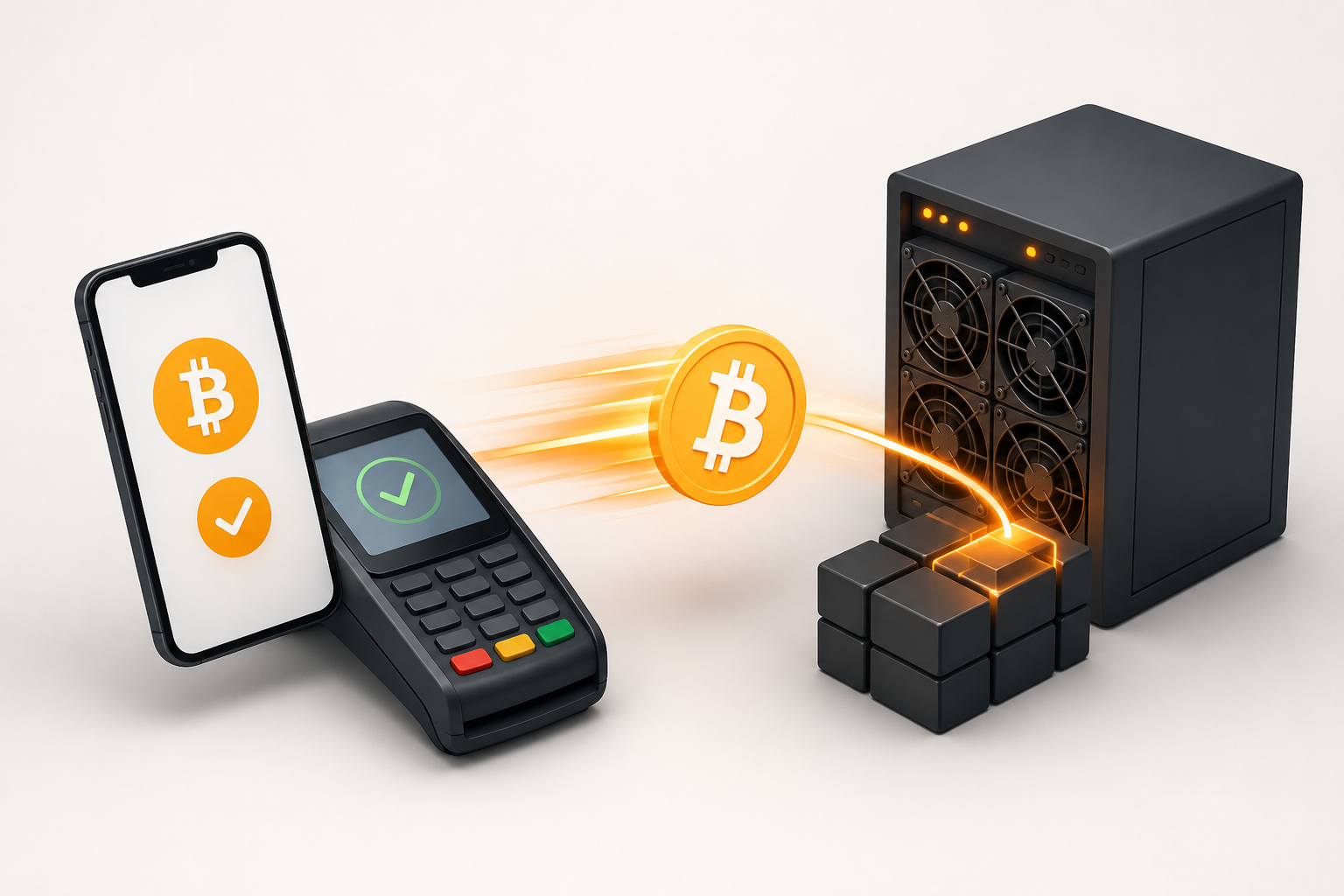
Traditional retail acceptance of bitcoin has so far required compromises – either by opening channels on the Lightning Network or by using wrapper tokens on the Ethereum network. GoMining rejects these methods. Instead, the system routes each client transaction straight to its own dedicated mine and gives it absolute priority for writing to the nearest block.
The seller sees the confirmation on the terminal screen in a split second and can hand over the goods.
Fee sharing and economic incentives for portfolios
GoBTC Pay’s financial structure eliminates the burden of network fees on consumers. The entire cost of the transaction is borne by the store, paying a commission of 0.2% of the basket value.
By comparison, official Visa reports show that traditional interchange rates and payment card processing fees regularly exceed the 1.5% threshold, generating constant cost pressure for businesses. GoMining does not collect any margins on transactions carried out by third parties. Half of the commission goes directly to the miners securing the network, and the other 0.1% goes to the external wallet provider that technically initiated the transfer of funds.
This approach is intended to build a network effect at a time when giants such as Strategy are focusing on the accumulation of assets rather than their utilization in consumer turnover.
Settlement risk and centralized pool control
Concentrating the entire verification path in the hands of a single mine operator raises serious questions about risk management. According to the Stratum V2 protocol specification, the decentralization of the network depends on who actually decides on the selection of transactions to block templates. In the case of GoBTC, Pay to GoMining retains full authority over prioritization, which forces entrepreneurs to have absolute trust in the operational condition of one entity.
The security of funds is to be guaranteed by a 2-of-3 multi-signature model. One cryptographic key is held by the buyer, the second is co-signed by GoMining, and the third goes to an independent custodian.
However, the identity of this trustee and the precise procedures for emergency recovery of funds in the event of technical interruptions were not disclosed in Gen1’s official documentation. System integration challenges portfolios to assess whether the fraction of a percentage of commission offered fully offsets the technical risk of linking the operation to the performance of a single mine.