
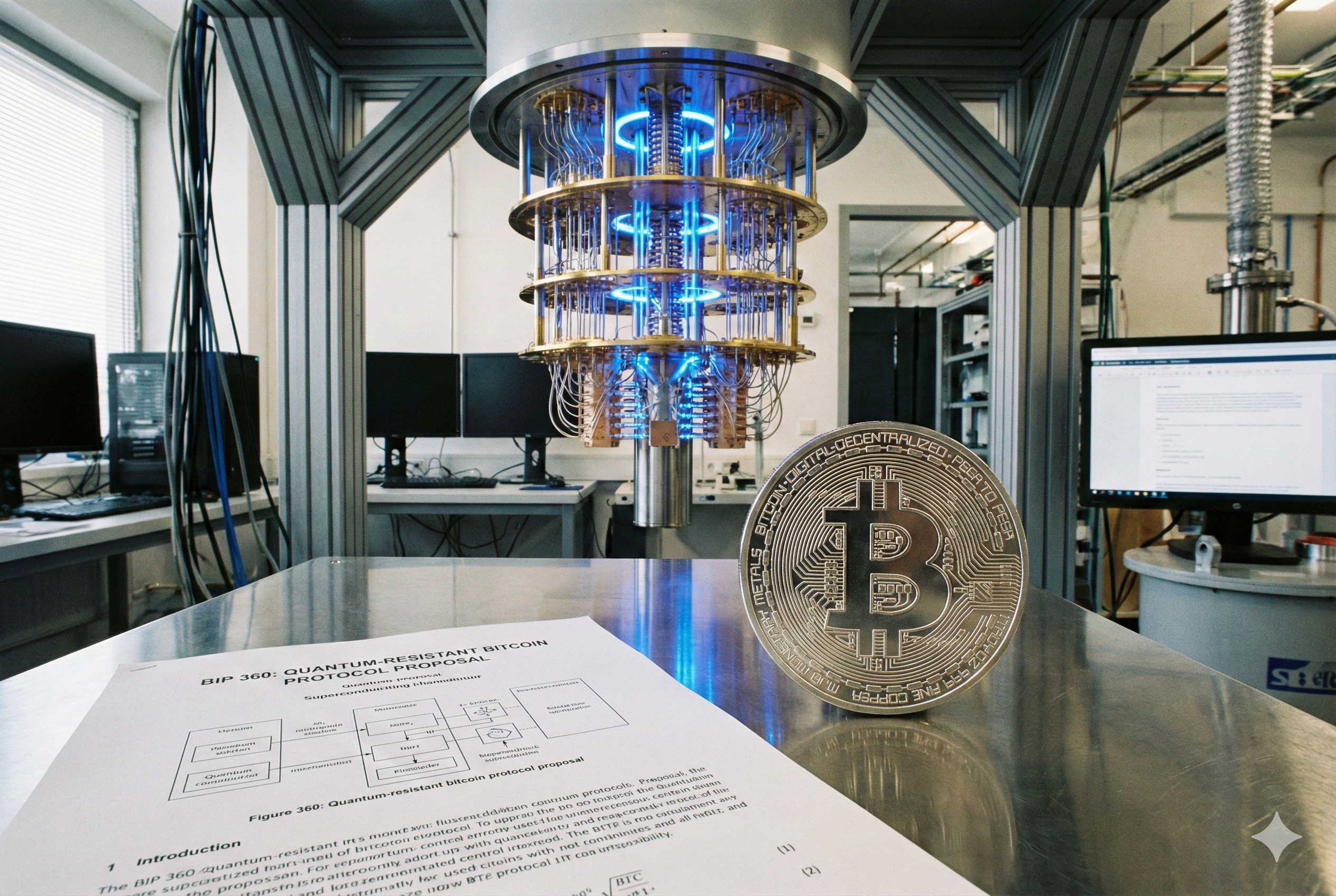
Bitcoin has just taken another step towards being resistant to quantum computers. BIP 360 – a proposal by Hunter Beast (pseudonym), Ethan Heilman (recognized cryptographer) and Isabel Foxen Duke – has officially landed in the BIP repository on GitHub. Sounds technical? Because it’s technical, but the devil (and Q-day immunity) is in the details.
Pay-to-Merkle-Root: Taproot with a quantum shield
P2MR eliminates this gap. The public key remains hidden in the Merkle tree until funds are spent. As long as the BTCs are on the address, the attacker only sees the hash, which is resistant to quantum attacks. Simple, elegant, effective.
Draft, not a soft fork. For now.
Importantly, BIP 360 is still a working specification (Draft). She is not active online. To come into force, it must pass through the “community meat”, developer debate and miners’ acceptance. Only then will it become a soft fork.
Reactions are mixed. Some see it as a necessary safeguard for cold wallets and long-term savings – something like “better safe than sorry”. Others, like Samson Mow, consider the quantum threat to be science fiction for decades to come.
Heilman gives credibility. Beast adds mystery.
Interesting fact – the co-author is Ethan Heilman – a cryptographer with a solid reputation in the Bitcoin ecosystem. This isn’t some random guy from the forums. BIP 360 is the first step in Bitcoin’s long-term quantum resilience strategy. It doesn’t change the foundations of the network, it doesn’t revolutionize anything tomorrow. But it sets the stage for an era in which quantum computers could become a real threat.
Global standards for quantum-secure cryptography are expected to be adopted in the 2030s. Bitcoin is getting ready. Does the rest of the cryptocurrency world do too?