
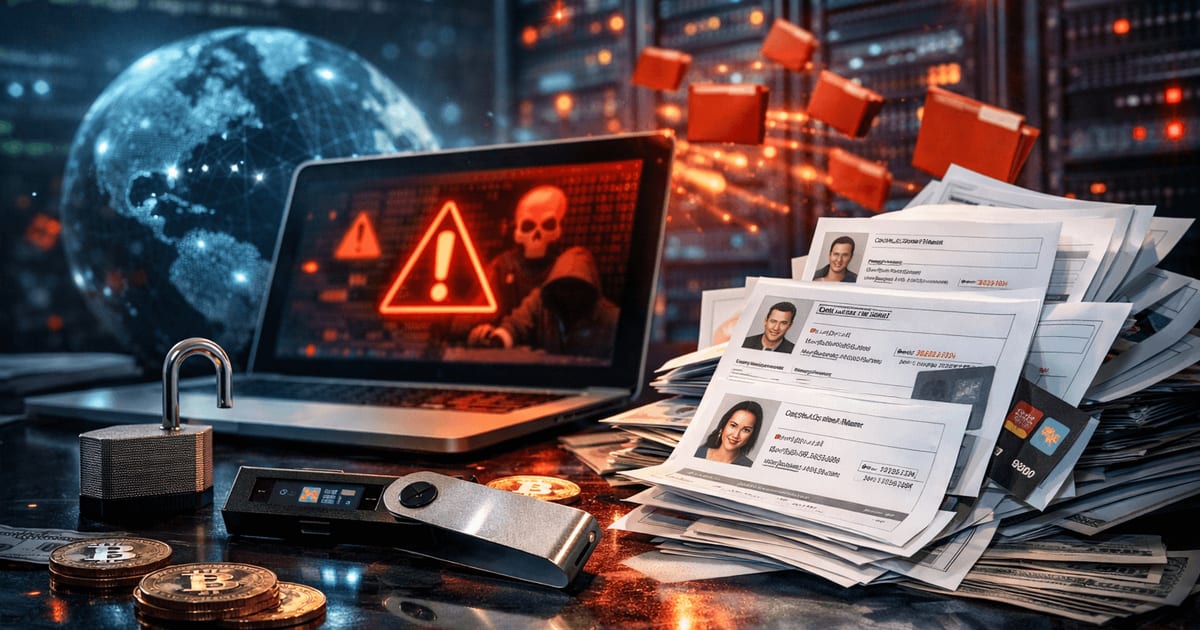
The deja vu that no one wanted
There is no denying that Ledger has terrible luck with databases, or he simply chooses poor collaborators. Global-e, which handles sales and shipments, suffered a major failure. Someone unauthorized entered their systems and simply took out customer data. Names, surnames, e-mails, telephone numbers and even home addresses – all this fell into the hands of hackers.
For the crypto community, it’s like hitting a fresh wound. Do you remember 2020? Then the data of over 270,000 people was leaked, which resulted in an avalanche of threats and extortion attempts. Now history is repeating itself, and we have to ask ourselves again: what does it matter if your wallet is strong if your personal data are flying around the Internet like leaflets from a pizzeria?

Don’t worry, your crypto hasn’t gone anywhere
However, before you panic and start nervously checking the account balance on your Nano X or S Plus – stop for a moment. Your cryptocurrencies are safe. This whole scandal has absolutely nothing to do with the security of the device itself. Private keys and those famous 24 words (seed) are intact because Ledger keeps them physically disconnected from the Internet. In this respect, the technology worked exactly as it should.
So where’s the catch? In social engineering. Hackers now know exactly that you have a crypto wallet at home. They will try to approach you, pretending to be support, threatening you with account blocking or a “mandatory update”. This is not an attack on the code, it is an attack on your nerves.
Do you currently have cryptocurrencies?
It’s about cryptocurrencies on an exchange, in an application or in a wallet. Don’t treat cryptocurrency ETFs, ETNs and ETPs as ownership.
The survey is anonymous and voluntary. We do not collect your name or IP address. We only publish data in aggregate. Privacy Policy
How not to get robbed?
Now that we know that the data has gone out into the world, you need to be more vigilant than usual. Here are some ironclad rules:
- Your seed is sacred. If any website, email or application asks you to enter 24 words – run away. Ledger will never, under any circumstances, ask about this.
- Doubt every email. See an urgent ID verification request? It’s almost certainly a trap.
- Don’t click on links. If you want to check something, go to the manufacturer’s official website by entering the address manually in your browser.
- Fairy tales about “safe repair wallets”. If someone tells you to transfer funds to another address to “save” them – congratulations, you’re talking to a thief.
Ledger, of course, announces legal action and promises to tighten the screws on its suppliers. However, this is another bitter lesson for us. In the Web3 world, blockchain may be unbreakable, but traditional intermediary databases are still as leaky as Swiss cheese.