
Key conclusions
- Charles Hoskinson claims that the crypto industry will absorb artificial intelligence due to the growing energy and financial crisis of data centers.
- Cardano’s founder points out that blockchain technology ensures payments, data ownership and verification of their origin, solving insurmountable barriers for AI models.
- According to calculations by the creator of Input Output Global, the adoption of the key American regulatory act CLARITY Act will be delayed until 2029.
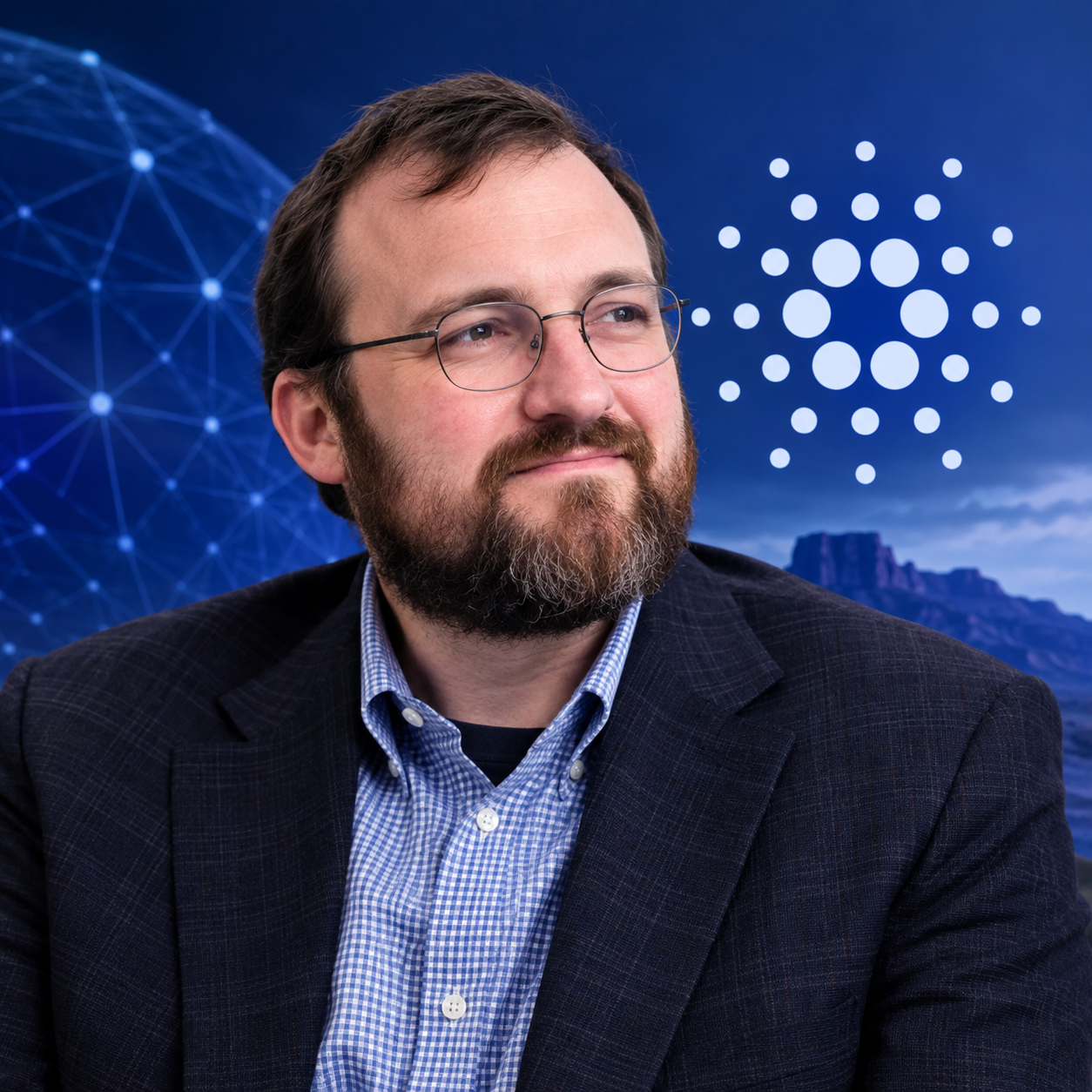
Cardano founder Charles Hoskinson announced on the podcast Deeptech Insightsthat the cryptocurrency industry will take over the artificial intelligence market. This breakthrough will occur when the current boom in the construction of centralized data centers collides with the hard walls of economics and the lack of electricity supplies. According to the creator of the Cardano network, traditional computing infrastructure will not withstand the annual tenfold increase in financial outlays, and technology giants will be faced with the need to quickly achieve profitability.
Hoskinson thinks the data center boom is going to bust @Cardano founder Charles Hoskinson (@IOHK_Charles) said he thinks that crypto will absorb AI within five to ten years, arguing blockchains already solve payments, alignment, and data provenance. Speaking on deep tech
Hoskinson explains the data center crisis
The current phase of artificial intelligence development is based on a race for computing power in which infrastructure investment is growing at an unsustainable rate. In the opinion of Cardano’s founder, the energy infrastructure will not cope with the demand for new facilities. Enterprises developing gigantic language models incur huge costs at the pre-training stage, which, in the absence of scale of profitability, leads to an investment bubble.
Hoskinson compares the situation to the turn of the century and the construction of fiber optic networks. In the late 1990s, investors pumped billions of dollars into infrastructure, about 90% of which lay unused for nearly a decade before market demand matched existing capacity. Exactly the same scenario awaits large data centers. Excessive infrastructure growth will force the industry to abandon centralization in favor of local, smaller models that run directly on user devices, such as the Apple M5 Mac Studio.
When the burden of computation shifts to distributed networks of private smartphones and graphics processors, blockchain technology will become the only existing system capable of efficiently coordinating such resources.
Why Hoskinson thinks crypto will solve AI’s problems
Artificial intelligence currently hits legal and organizational barriers that it cannot overcome on its own. It’s about automatic micropayments, secure copyright management and establishing operational consistency rules. Central corporations are trying to impose their own rules regarding freedom of speech or acceptable behavior of algorithms.
Blockchain introduces impartial, digital rules enforced throughout the network. This technology also allows you to record the exact provenance of your training data. Recording in the distributed ledger network allows automatic payment of royalties to content creators whose works were used to train algorithms. Instead of making the market dependent on the will of a few Silicon Valley boards, crypto provides a ready-made settlement and legal layer.
The historical parallelism is clear here. When the digital currency market was emerging, traditional cryptographers distanced themselves from this industry. The situation changed when capital appeared in the sector, allowing it to employ the best engineers. The same process awaits artificial intelligence specialists in the next five to ten years.
The future of crypto regulation in the United States
The US Senate confirmed these predictions by rejecting the bill – in the vote on September 15, there were not enough votes to exceed the required threshold of 60 votes. The delay in the legislative process will maintain legal uncertainty around new projects, although the main market assets will likely maintain their current status.