Key takeaways:
- A federal judge has ruled that sports performance contracts are not swaps under the Commodity Exchange Act.
- Kalshi cannot invoke the CFTC’s exclusive jurisdiction to block state government action.
- Sports contracts account for approximately 80-90% of Kalshi’s offerings and revenues.
Judge: Kalshi contracts are not swaps
The dispute concerns the so-called Prediction markets where users can enter into contracts for future events. In the case of Kalshi, sports contracts constitute a huge part of its business – according to the court, they account for approximately 80-90% of the platform’s offer and revenues.
However, Judge Oliver found that the result of the match was not in itself an “event” within the meaning of the swaps rules. The match itself may or may not take place, but who wins it is its result, not a separate event.
The court also indicated that for a contract to be considered a swap, there must be an appropriate connection with financial, economic or commercial consequences. According to Oliver, it cannot be created only through external sponsorship agreements, bonuses or bets concluded by other entities.
Kalshi did not convince the court with his argument about the authority of the CFTC
The company tried to argue that Connecticut authorities had no right to interfere with its operations because oversight of such contracts should rest solely with the federal Commodity Futures Trading Commission.
However, the judge rejected this argument. He said federal laws do not automatically deprive states of the ability to enforce their own gambling and sports betting regulations.
Moreover, the CFTC never conducted a detailed review of Kalshi’s special-authority sports contracts or issued an injunction against them. In the court’s opinion, this weakens the argument that the federal regulator has exclusive competence in this matter.
Kalshi also failed to demonstrate the so-called irreversible damage. The court noted that the company’s potential losses were primarily financial in nature, and the platform had been repeatedly warned by regulators and continued to offer contracts anyway.
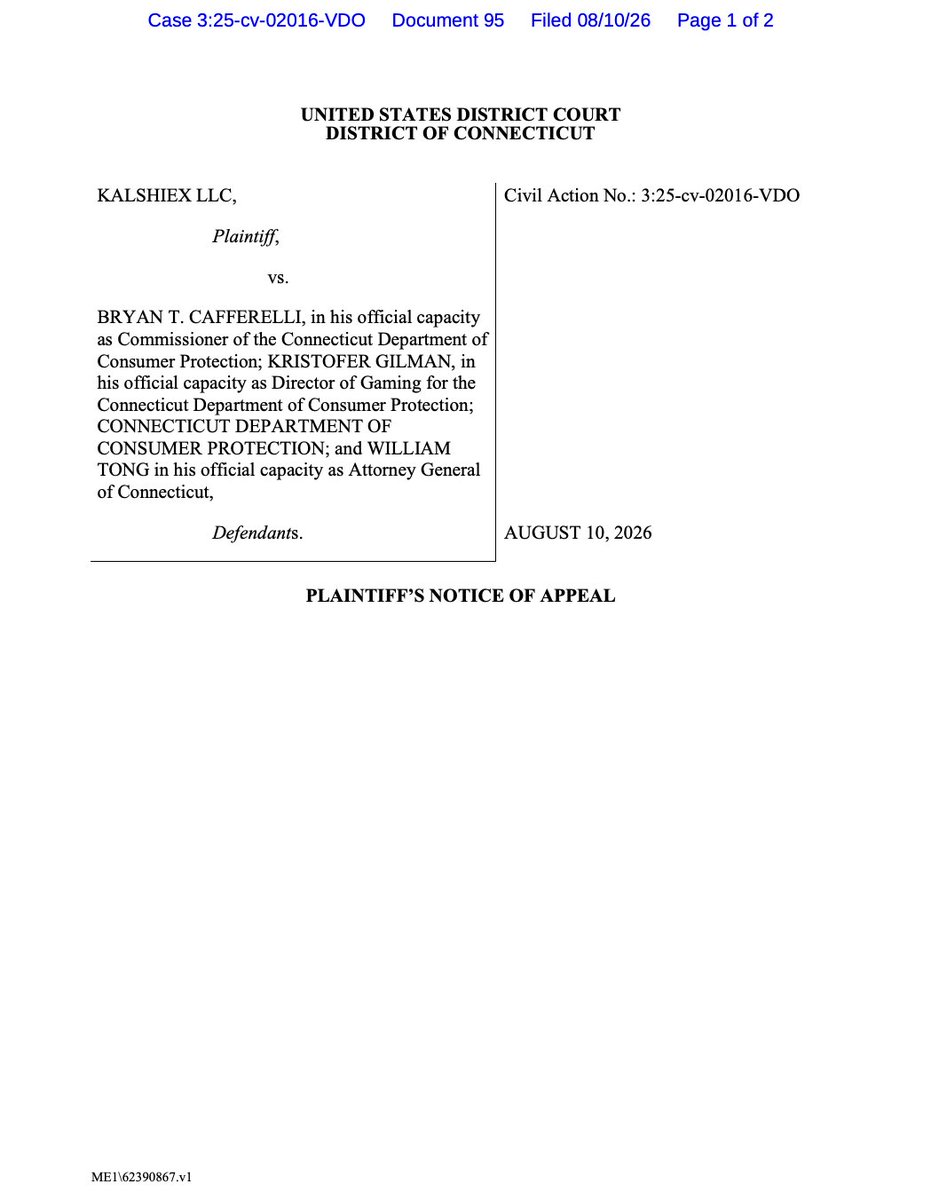
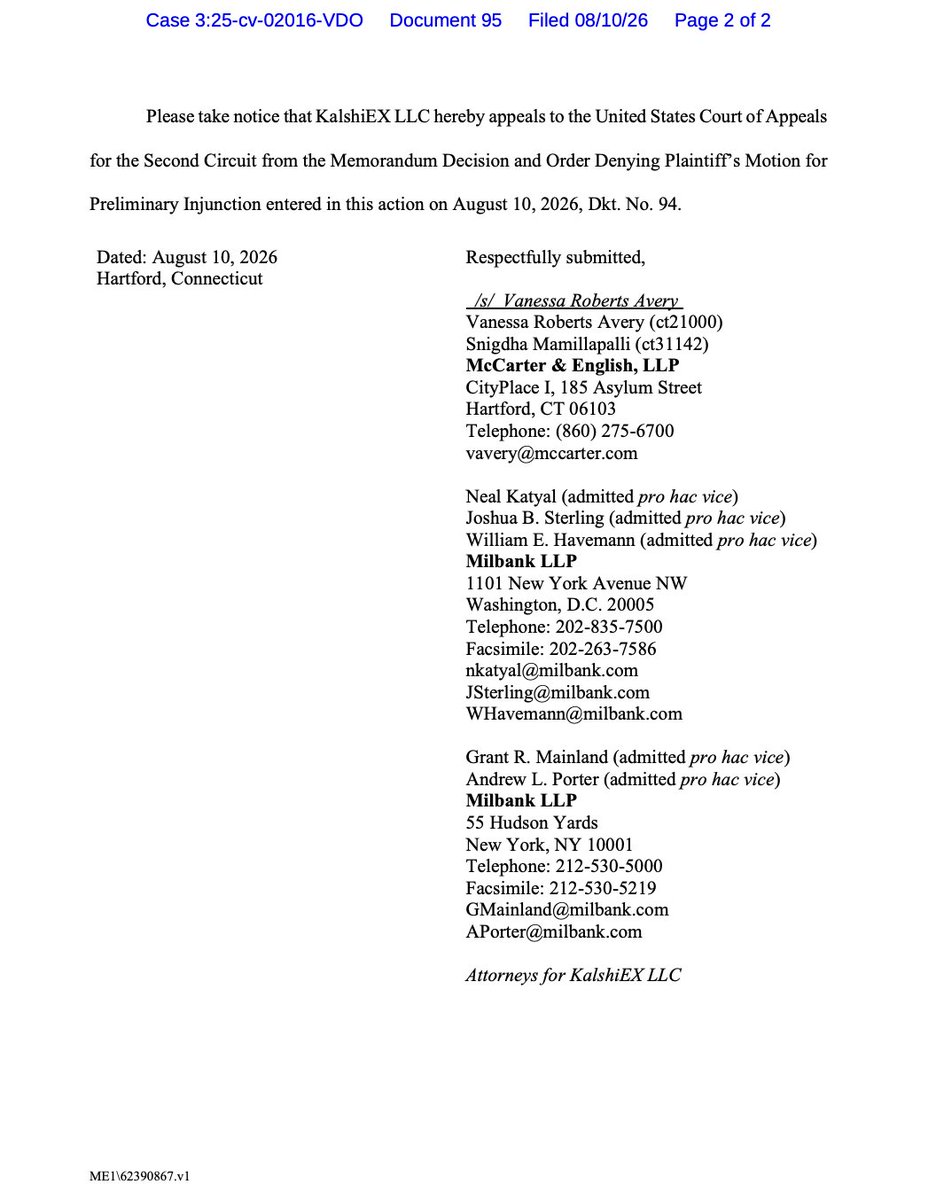
So far, Kalshi has appealed the Connecticut District Court’s ruling.
Kalshi has appealed the Connecticut federal district court’s denial of its motion for preliminary injunction to the Second Circuit Court of Appeals. The next step: asking Judge Oliver and then the CA2 to enter an immediate injunction pending appeal to block state-law enforcement.