
Key takeaways:
- The government is pushing its own act on cryptoassets.
- Karol Nawrocki may veto it for the third time.
- The dispute concerns the level of regulation and market control.
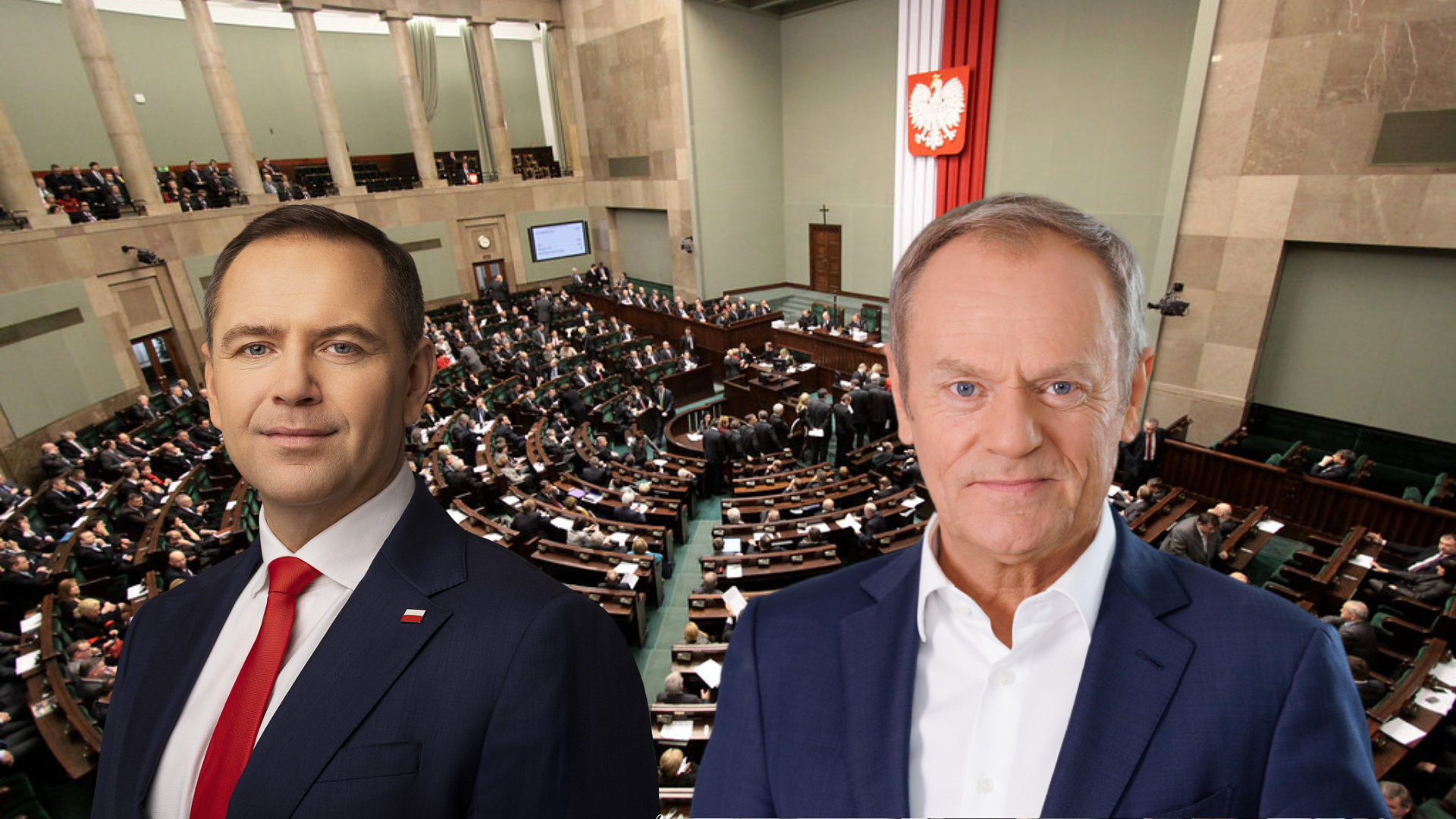
The Polish political scene is entering the next phase of the dispute over the regulation of cryptocurrencies. The ruling coalition led by Prime Minister Donald Tusk does not intend to budge and is pushing its version of the bill, even though President Karol Nawrocki has already vetoed it twice. Now the market is faced with a question: will there be a third veto or – probably a rotten – compromise?
Poland, or many visions of the cryptocurrency market
Polish politicians are arguing over how to regulate the cryptocurrency industry. The ideas of the Confederation are more liberal, while those of the government are more restrictive.
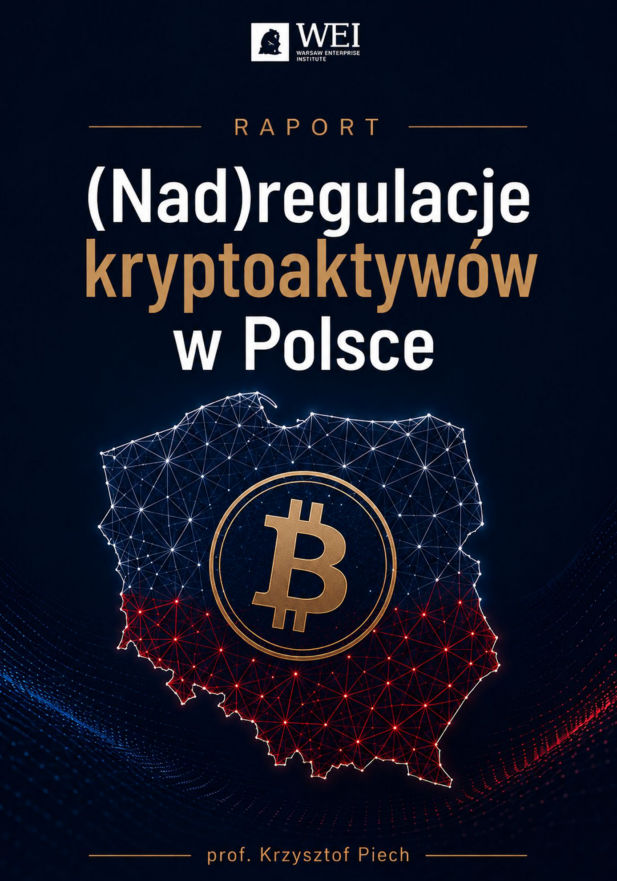
Cryptocurrencies. @FundacjaWEI published the report of prof. Krzysztof Piech “(Over)regulation of crypto-assets in Poland. Below is a summary. As usual – the idiotic tribal war has dramatic consequences and will deprive us of money.
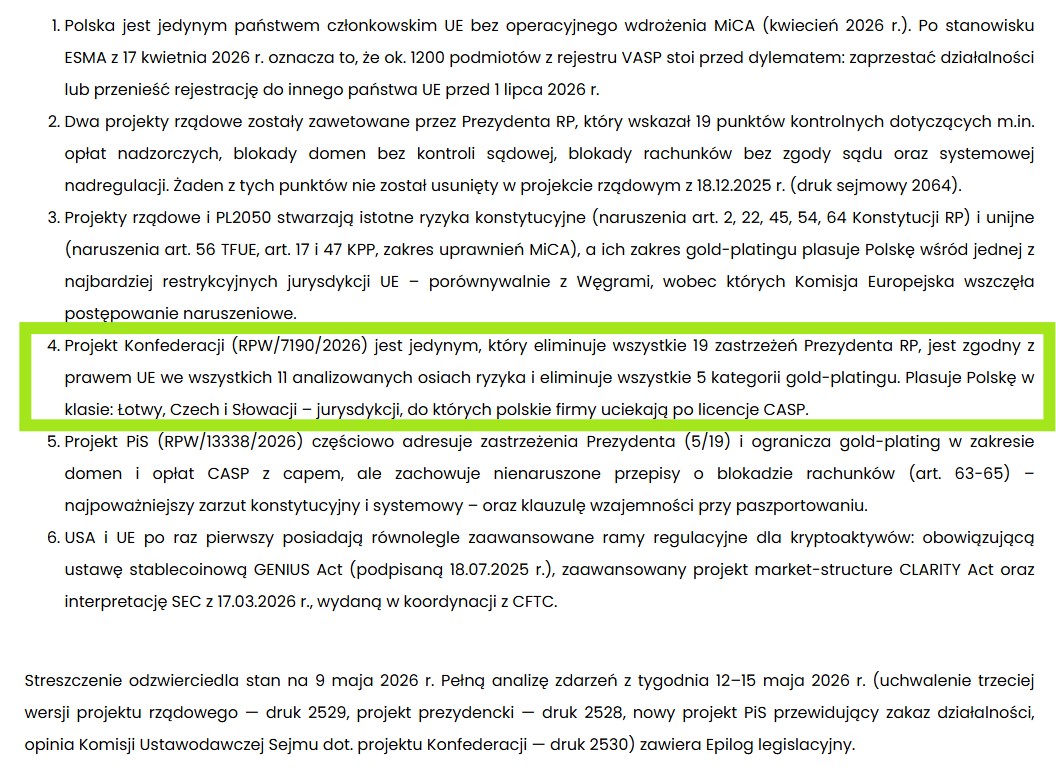
However, specific regulatory mechanisms are the most controversial. The KO draft shows that the Polish Financial Supervision Authority is to supervise the digital assets industry. This is a problem because all crypto companies have seen how it has hindered their operations for many years. And this is even at such a basic level as maintaining a bank account.
However, the president only wants slight liberalization (e.g. lower fees). He has already vetoed the government’s bill twice before. As a result, the industry is in a legislative bind: the government does not have a sufficient number of MPs to “overcome” the president’s veto, and the opposition does not have enough strength in the Sejm to push through its ideas.
As a result, the government bill was vetoed twice, and the lower house failed to reject the objection twice.
And now there is the possibility of a third veto, which clearly shows that cryptocurrencies have become an element of a broader political game in Poland. For Nawrocki, signing the bill may mean a concession to the government, and vetoing it may mean a political risk, especially after the scandal related to the collapse of the zondacrypto stock exchange. In turn, the government hopes that social and regulatory pressure will force the president to change his position.
An additional factor is the entry into force of the European MiCA regulations. The lack of national regulations causes cryptocurrency companies to move their operations abroad, where they can obtain licenses. This creates a paradox: the protracted political dispute not only delays regulations, but actually pushes industries outside Poland.
There is so little of that time now that everyone who wants to operate has gone abroad to get a license there. On the other hand, after zondacrypto, people got scared and the wave of investing in cryptoassets subsided
The market is in suspension
The current situation is a classic example of “wait and see”. The market is waiting for Karol Nawrocki’s decision, and it depends on it whether Poland will move towards strong regulation, further legislative chaos or the next stage of political conflict. On the other hand, however, if the head of state signs the act in its current form, it will hit the industry and cause its representatives to choose other European jurisdictions in which they will register their companies and operate in our country on the basis of passporting. For them, not much will change, but they will pay taxes not to the budget in Warsaw, but to, for example, Berlin or Paris.
One thing is certain: cryptocurrencies in Poland are no longer just a strictly technological or investment topic. They have become a full-fledged element of economic policy and the fight for control over the financial market. What’s worse, they are now a political issue, which is not conducive to development.